• Skip to primary navigation
  • Skip to main content
  • Skip to footer
  • Crankbait
  • Spinnerbaits
  • Jigs
  • Swimbaits
  • Topwater lures
  • Jerkbaits
  • Worms

Best Bait For Bass

Best Bass Baits, Lures - Best Spinning Reels - Best Rods and Best Lines for Bass. Everything for Bass Fishing


  • Home
  • Bass Baits and Lures
  • Shop

Best Bait for Bass

Do Bass Sleep? What Science Reveals About Bass Resting Behavior

October 26, 2026 By best bait bass

Bass are among the most studied freshwater sport fish in North America, yet one question continues to spark debate among anglers: Do bass actually sleep?

The short answer is yes. However, bass do not sleep in the same way humans do. They do not close their eyes, lie down, or enter deep unconscious states. Instead, they experience periods of reduced activity and rest that help conserve energy while still allowing them to remain aware of predators and feeding opportunities. This sleep-like behavior has been observed across many fish species and is supported by modern scientific research.

do bass sleep

Do Bass Sleep?

Yes, largemouth bass and smallmouth bass enter periods of rest that fulfill the biological functions of sleep.

Scientists generally describe this behavior as a sleep-like state or quiescence, during which fish reduce movement, lower energy expenditure, and become less responsive to external stimuli while remaining capable of quickly returning to full activity when necessary.

Unlike humans, bass must remain partially alert because their environment constantly presents threats and opportunities. As a result, their version of sleep is lighter and more adaptive than mammalian sleep.

What Does Sleep Look Like in a Bass?

Many anglers expect sleeping fish to behave like sleeping mammals, but bass rest very differently.

A resting bass may:

  • Hover nearly motionless in the water.
  • Hold position beside cover.
  • Move only enough to maintain balance.
  • Show reduced reactions to nearby movement.
  • Conserve energy by lowering overall activity.

Because bass lack eyelids, they cannot close their eyes while resting. Their eyes remain open even during extended periods of inactivity.

To an angler using forward-facing sonar or underwater cameras, a resting bass often appears suspended in the same location for long periods, seemingly uninterested in nearby activity.

Do Bass Sleep at Night?

Nighttime is one of the most common periods for rest, but bass are not strictly nocturnal or diurnal.

Research suggests that fish activity is heavily influenced by circadian rhythms, which are biological cycles tied to light and darkness. Bass often reduce activity at night, but they can remain active when conditions favor feeding opportunities.

In many lakes, bass become highly active during:

  • Dawn
  • Dusk
  • Moonlit nights
  • Cooler summer evenings

This means bass may alternate between resting and feeding throughout the night rather than sleeping continuously.

Where Do Bass Sleep?

When resting, bass typically seek locations that provide protection and require minimal energy to maintain position.

Common resting areas include:

Aquatic Vegetation

Weed beds and grass lines provide security, shade, and protection from larger predators.

Fallen Timber

Submerged logs and brush piles offer excellent cover while reducing exposure.

Boat Docks

Dock pilings and floating structures create shade and relatively stable conditions.

Deep Water

During hot summer months, bass often rest in cooler, deeper water during the day.

Rock Structures

Points, ledges, and rock piles can serve as resting locations, especially when current or wind conditions are favorable.

Field observations indicate that resting bass frequently position themselves around these structures while displaying minimal movement.

Can You Catch a Sleeping Bass?

Absolutely.

One of the biggest misconceptions in bass fishing is that resting fish cannot be caught.

A bass may not be actively feeding, but it can still strike because of:

  • Territorial instincts
  • Reflex reactions
  • Curiosity
  • Aggression during spawning periods

This is why reaction baits such as crankbaits, jerkbaits, spinnerbaits, and topwater lures often trigger strikes from fish that do not appear to be feeding.

Many anglers unknowingly catch resting bass every season.

How Water Temperature Affects Bass Sleep

Water temperature is one of the most important factors influencing bass activity levels.

Winter

Cold water slows metabolism significantly.

Bass feed less frequently and spend longer periods conserving energy.

Spring

As temperatures rise, bass become increasingly active while preparing for spawning.

Summer

Very warm water often causes bass to rest during the hottest parts of the day and feed during low-light periods.

Fall

Bass typically become more active and aggressive as they prepare for winter.

Researchers note that fish sleep-like states and activity cycles are strongly influenced by environmental conditions, including light cycles and temperature.

Do Trophy Bass Sleep Differently?

Large bass are known for being remarkably energy efficient.

Older fish have survived years of fishing pressure and predation by minimizing unnecessary movement and feeding only when conditions are favorable.

As a result, trophy bass often:

  • Spend more time resting.
  • Feed during shorter windows.
  • Remain close to secure cover.
  • Move less frequently than younger fish.

This behavior is one reason giant bass can be so difficult to consistently catch.

Bass Sleep Myths

Myth #1: Bass Never Sleep

False.

Scientific evidence supports the existence of sleep-like states in fish characterized by reduced activity and responsiveness.

Myth #2: Bass Sleep Only at Night

False.

Bass may rest during both day and night depending on environmental conditions.

Myth #3: Sleeping Bass Can’t Be Caught

False.

A resting fish can still react aggressively to a lure entering its strike zone.

Myth #4: Bass Close Their Eyes When Sleeping

False.

Bass have no eyelids and rest with their eyes open.

What Does Science Say About Bass Sleep?

Recent scientific reviews have strengthened our understanding of sleep-like behavior in fish.

According to a review published in Chronobiology International, fish exhibit sleep-like states characterized by decreased motor activity, increased response thresholds, and regulation by circadian rhythms. The review also notes that sleep deprivation negatively affects fish behavior and cognitive performance.

A separate review published in the Journal of Experimental Biology concluded that behavioral sleep has been observed across fish species studied to date and that fish consistently display the accepted scientific criteria used to identify sleep.

Scientists generally evaluate fish sleep using several key indicators:

  • Reduced movement
  • Predictable resting periods
  • Increased difficulty in arousing the animal
  • Rapid recovery when disturbed

Bass demonstrate all of these behaviors during their resting periods.

Why Bass Don’t Sleep Like Humans

The main reason bass sleep appears unusual is because fish physiology differs substantially from mammalian physiology.

Unlike humans:

  • Bass have no eyelids.
  • Bass do not enter REM sleep as mammals do.
  • Bass remain partially aware of their surroundings.
  • Bass must continue basic physiological functions while resting.

Researchers often describe their resting behavior as quiescence rather than traditional sleep.

Still, the biological purpose remains similar: restoration, energy conservation, and maintenance of healthy brain and body functions.

Frequently Asked Questions

Do bass sleep with their eyes open?

Yes. Bass do not have eyelids, so they rest with their eyes open.

How long do bass sleep?

Scientists have not established a universal sleep duration for bass. Resting periods vary depending on environmental conditions such as temperature, season, food availability, and light cycles.

Are bass active at night?

Yes. Bass can be highly active after dark, especially during warm months and under favorable feeding conditions.

Can bass be caught while resting?

Yes. Resting bass frequently strike lures due to instinctive or territorial reactions.

Do largemouth and smallmouth bass sleep?

Yes. Both species display periods of reduced activity and rest, although exact behavioral patterns may vary depending on habitat and environmental conditions.

Final Thoughts

So, do bass sleep?

The evidence strongly suggests they do, although not in the same way humans sleep. Bass enter sleep-like states that allow them to conserve energy, recover from activity, and maintain healthy biological functions while remaining alert enough to respond to threats and feeding opportunities. Scientific research on fish sleep continues to expand, but current evidence supports what many observant anglers have long suspected: bass spend part of each day resting, even if they never close their eyes.

References

Topal, A. (2026). Sleep, Circadian Rhythms, and Brain Function in Fish. Chronobiology International.

Norman, H., Munson, A., Cortese, D., Koeck, B., & Killen, S.S. (2024). The Interplay Between Sleep and Ecophysiology, Behaviour and Responses to Environmental Change in Fish. Journal of Experimental Biology.

Do Fishes Sleep? The Science of How Fish Rest. Biology Insights.

Do Fish Go to Sleep? The Science of How Fish Actually Rest. Biology Insights.

Do Fish Sleep? Fish Rest and Activity Cycles. Dr. Zubair Khalid.
Filed Under: Bass Fishing Questions Answered Tagged With: Bass Activity, Bass Behavior, Bass Facts, Bass Fishing Questions, Bass Habitat, Bass Science, Bass Sleep, Fish Behavior, Largemouth Bass, Smallmouth Bass

The Finesse Revolution: How to Catch Pressured Bass with Micro Ned Rigs

September 30, 2026 By best bait bass

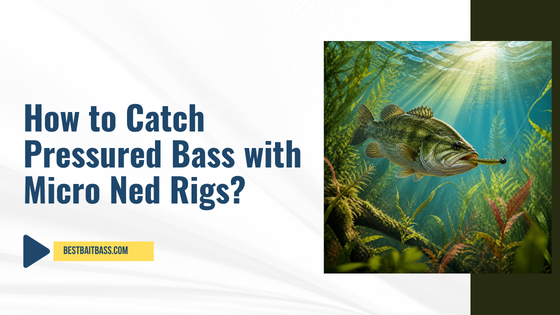
When the sun is high, the water is crystal clear, and the fishing pressure is at an all-time high, the trophy bass in your favorite lake seem to develop a graduate-level education in avoiding traditional lures. While standard crankbaits and bulky jigs might trigger aggressive strikes in the spring, pressured bass often require a more subtle approach. Enter the micro ned rig—a game-changing technique that has become the secret weapon for tournament pros and weekend warriors alike. By downscaling your profile, you tap into the innate curiosity and predatory instincts of fish that have ignored everything else in your tackle box.

micro ned rig

Understanding the Micro Ned Rig Phenomenon

The micro ned rig is essentially a miniature version of the classic Ned rig, typically utilizing baits under 2.5 inches paired with jig heads weighing between 1/32 and 1/16 ounce. The magic lies in the buoyant plastic and the slow, agonizing descent of the bait. Because these baits are so small, they mimic tiny baitfish, crawfish, or aquatic insects that larger bass often consume with zero hesitation.

Why Size Matters in High-Pressure Scenarios

In heavily fished waters, bass become conditioned to the “thump” and vibration of traditional moving baits. A micro ned rig provides a minimalist silhouette that doesn’t trigger the caution sensors of a veteran largemouth or smallmouth. It is the ultimate finesse tool for when conditions are tough.

Essential Gear for Micro Finesse Success

To effectively fish a micro ned rig, you cannot use your standard heavy-action flipping stick. You need specialized gear that allows for casting ultra-light weights while maintaining the sensitivity required to detect the slightest ‘tick’ on the line.

Rod and Reel Specifications

For these tiny weights, a light or ultra-light power spinning rod with a fast action is essential. Pair this with a 1000 or 2000 series spinning reel spooled with 6-pound test fluorocarbon line or a 10-pound braid to 6-pound fluorocarbon leader. The lack of stretch in these lines is vital for setting the hook at the end of a long cast.

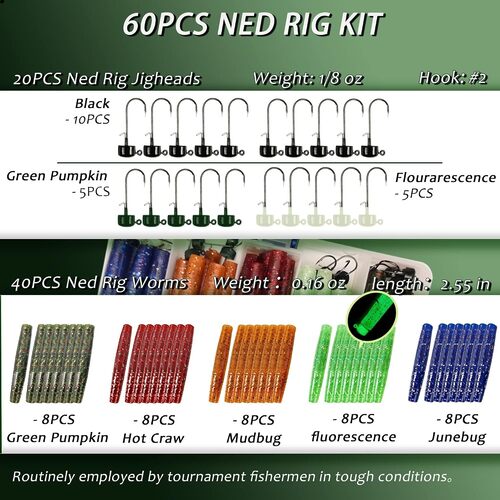
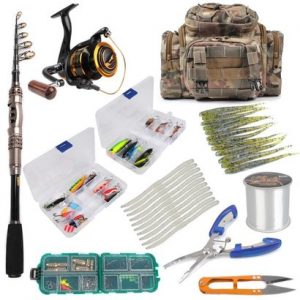
Micro Ned Rigs Kit

Check Price

Tactical Approaches for Pressured Waters

When you are fishing a pressured fishery, location and patience are your best friends. These fish are often found holding tight to structural elements or suspended in deep grass lines where they feel protected from the onslaught of topwater and spinnerbait anglers.

Identifying Key Zones

Focus on transition zones, such as where hard bottom meets soft silt, or the outer edges of weed beds. A micro ned rig excels when worked slowly along these boundaries, as it mimics natural forage that isn’t moving fast enough to be a threat, but is certainly worth an easy meal.

Comparison: Traditional vs. Micro Ned Rigs

Feature Traditional Ned Rig Micro Ned Rig Recommended Use
Bait Size 3.0″ – 4.0″ 1.5″ – 2.5″ High pressure / cold water
Jig Weight 1/8 oz – 1/4 oz 1/32 oz – 1/16 oz Finesse / ultra-clear water
Best Action Glide / Bounce Twitch / Dead-stick Finicky suspended fish
Line Weight 8 lb – 10 lb 4 lb – 6 lb Maximum stealth

Mastering the Retrieval and Presentation

The most common mistake anglers make with the micro ned rig is working it too fast. The bait is designed to stand up on the bottom or quiver in place. The ‘do-nothing’ retrieve is often the most lethal; simply cast it out, let it hit the bottom, and let it sit. If you don’t get a bite in ten seconds, give the rod tip a slight twitch to stir up some silt, then let it sit again.

The Importance of the ‘Dead-Stick’ Technique

Many anglers underestimate the power of letting the bait sit completely still. A micro ned rig’s buoyant material causes the tail to vibrate with even the smallest ripple in the water, mimicking a dying crustacean. This subtle action is often enough to entice a follow-up bite from a bass that has been stalking your bait.

Conclusion

The micro ned rig is more than just a lure; it is a philosophy of patience and precision. By embracing the finesse revolution, you can unlock the potential of your local waters and consistently put more fish in the boat, even on the toughest days. Start by downscaling your gear, focus on the bottom composition, and don’t be afraid to let your bait soak in the strike zone. Once you see how effectively this technique triggers bites from pressured bass, it will quickly become the most important tool in your arsenal.

Filed Under: Bass Fishing, Best bass lures Tagged With: BASS FISHING, BASS LURES, Finesse Fishing, fishing tips, Ned Rig

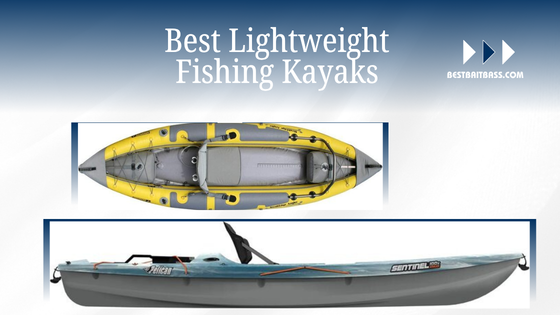
Lightweight Fishing Kayaks: Reviews and Best Models

August 25, 2026 By best bait bass

Picture this: The mist is rising off the glassy surface of a hidden backcountry bass pond. The birds are just beginning their morning chorus, and the big lunker bass are feeding tight to the lily pads. In the past, getting your boat to this pristine destination required a grueling hike, dragging a heavy, 120-pound rotomolded plastic vessel through thick brush, or risking damage to your vehicle’s roof rack. By the time you launched, your back was aching, your energy was sapped, and the prime early morning bite was already fading. This is where the magic of the modern portable fishing kayak comes into play, transforming how anglers access remote waters.

best lightweight fishing kayaks

Over the last few years, the paddle-sports industry has seen a massive shift toward lightweight engineering. Anglers are realizing that you do not need a massive, heavy boat to catch trophy bass. High-quality lightweight fishing kayaks give you the freedom to launch anywhere—from steep, rocky riverbanks to muddy road shoulders—without needing a trailer or a team of friends to help you unload. In this comprehensive guide, we will break down the absolute best kayaks for fishing in the lightweight category, review their performance on the water, analyze key structural designs, and help you choose the ultimate craft to elevate your bass fishing adventures.

Model Name Weight Load Capacity Length Price Range Kayak Type Pros Cons
Pelican Sentinel 100X 44 lbs 275 lbs 9’6″ $ (Budget) Sit-on-Top Lightweight, affordable, easy transport Lower capacity, less stable in waves
Crescent UltraLite 49 lbs 350 lbs 10’2″ $$ (Mid-Range) Sit-on-Top / Hybrid Higher capacity, versatile design Slightly heavier, mid-range price
Advanced Elements StraitEdge 41 lbs 300 lbs 9’8″ $$ (Mid-Range) Inflatable Very portable, quick setup Less durable than hard-shells
Eddyline Caribbean 12 50 lbs 350 lbs 12’0″ $$$ (Premium) Thermoformed ABS Premium build, excellent stability Higher price, bulkier transport
BOTE Deus Aero 41 lbs 300 lbs 11’0″ $$$ (Premium) Inflatable Hybrid Hybrid versatility, lightweight Expensive, less rigid than ABS

Why Choose a Lightweight Fishing Kayak?

Choosing a fishing kayak is always a compromise between tracking, stability, storage space, and weight. However, opting for a lighter vessel offers game-changing advantages that far outweigh minor sacrifices. A lighter kayak allows you to fish more often because it lowers the barrier to entry. If loading and unloading your kayak is a chore, you will find yourself staying home on those short, two-hour evening windows. When your kayak is light enough to toss into the bed of a truck or lift effortlessly onto a roof rack with one hand, your spontaneous fishing trips will skyrocket.

Benefits of Easier Transport and Storage

One of the most immediate benefits of searching for the optimal sit-on-top kayaks weight is how much easier your life becomes off the water. Heavy fishing kayaks, especially those equipped with complex pedal drives and heavy-duty rotomolded hulls, can easily tip the scales at 100 to 150 pounds when fully rigged. This requires specialized loading systems, heavy-duty trailers, and ample garage space.

Conversely, a lightweight, portable fishing kayak typically weighs between 35 and 50 pounds. This means almost any adult can lift it overhead without risk of injury. Storage also becomes a breeze; you can easily hang a 40-pound kayak on garage wall mounts, store it in an apartment closet if it is a lightweight inflatable kayak, or carry it down a flight of stairs. It also increases your vehicle efficiency, minimizing wind resistance and reducing the impact on your car’s fuel economy during long road trips to tournament waters.

Stability vs. Weight: How to Find the Perfect Balance

A common concern among bass anglers is whether a lighter hull translates to a tipsy, unstable ride. Many ask: Are lightweight kayaks stable enough to stand on during a cast? The short answer is yes, but it depends entirely on hull design and kayak width. Historically, heavier kayaks were wider, which naturally provided more surface area and higher stability. Today, however, manufacturers utilize smart hull geometry, such as pontoon or tunnel hulls, to maximize stability without adding physical weight.

To find the perfect balance, you must understand primary versus secondary stability. Primary stability is how stable the kayak feels when sitting flat on calm water. Secondary stability is how well the kayak resists tipping when it is put on its edge or when handling rough chop. High-quality stable river kayaks are designed with excellent secondary stability to handle moving water, swirling eddies, and sudden shifts in weight when fighting a massive largemouth bass. If standing is your primary goal, look for lightweight hulls that feature a wide, flat standing platform in the cockpit and a catamaran-style underside, which redistributes buoyancy to the outer edges.

Best Lightweight Fishing Kayaks of 2026 (Detailed Reviews)

To help you cut through the noise, we have thoroughly analyzed the market and assembled detailed fishing kayak reviews of the top lightweight performers. Each of these models excels in portability, construction quality, and on-the-water utility.

1. The Best Choice for Versatility and Weight

The Crescent UltraLite has earned a legendary reputation as a compact powerhouse that refuses to sacrifice performance. Weighing in at just 49 pounds, this kayak features a signature hull design that tracks like a much longer boat while maintaining incredible maneuverability. Built from high-quality, durable polyethylene, it is incredibly robust while remaining light enough to toss into a SUV or truck bed with ease.

What sets the Crescent UltraLite apart is its open, clean deck layout. It provides ample space for custom rigging, allowing you to install advanced kayaking fishing equipment such as fish finders, gear tracks, and camera poles. The seat is highly ergonomic, offering excellent lumbar support for long days on the water. On the water, it feels remarkably agile, making it one of the absolute best kayaks for fishing in tight creeks, winding rivers, and small ponds. It handles mild river currents beautifully and resists wind drift better than most high-sided lightweight boats.

2. The Best Ultra-Light Kayak for Solo Anglers

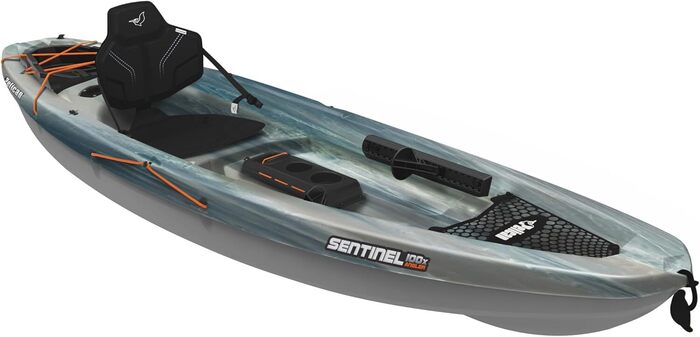
The Pelican Sentinel 100X is the gold standard for budget-friendly, ultra-lightweight solo kayak fishing. Weighing a mere 44 pounds, this sit-on-top kayak is constructed from Pelican’s proprietary RAM-X material—a multi-layer polyethylene that boasts exceptional impact resistance and memory properties (meaning it can bend and pop back into shape if it hits a rock).

Pelican Sentinel 100X Fishing Kayak

Check Price

This model is designed from the ground up for simplicity and ease of use. It features a Twin-Arched Multi-Chine Hull, which offers superb primary stability. While it is not designed for standing for long periods, it provides an incredibly stable sitting platform, making it a fantastic choice for casting near docks, reeds, and timber. The Sentinel 100X comes outfitted with flush-mount rod holders, a removable storage compartment (the ExoPak), and molded footrests. For solo anglers who want a grab-and-go boat that can be launched from literally anywhere without breaking the bank or their back, this is the ultimate solution.

3. The Best Inflatable Option for Easy Transport

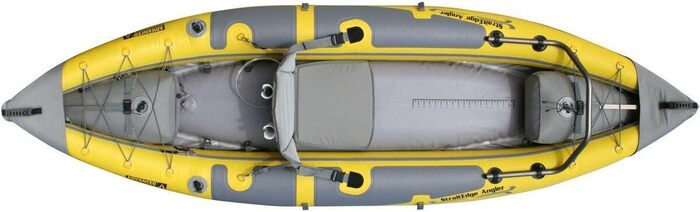
If storage space is at an absolute premium, or if you drive a compact sedan without a roof rack, the Advanced Elements StraitEdge Angler PRO is a game-changer. This lightweight inflatable kayak weighs 41 pounds and folds down into a neat, transportable duffel bag that fits easily into any trunk or closet.

Advanced Elements StraitEdge Inflatable Fishing Kayak

Check Price

Do not let the word “inflatable” fool you. This is a heavy-duty, puncture-resistant fishing machine built with drop-stitch floor technology. When inflated to high pressure, the floor becomes rock-hard, allowing you to stand and cast with absolute confidence. The StraitEdge Angler PRO features built-in aluminum rib frames in the bow and stern, which drastically improve tracking and cut through choppy lake water better than traditional inflatables. It also features accessory frames that allow you to mount rod holders, GPS units, and other vital fishing gear. It is highly resilient against hooks, tree branches, and rocks, proving that portability does not have to come at the cost of durability.

Key Factors to Consider When Buying

When looking for the ideal light craft, you cannot simply look at the weight spec sheet. You must consider how the hull material, hull design, and interior capacity fit your local waters and target species.

Material: ABS Plastic, Composite, or Inflatable

So, what material is best for lightweight fishing kayaks? The answer depends on your budget and how you plan to use the boat:

  • Thermoformed ABS Plastic: This is a premium material used by brands like Eddyline. It is significantly lighter than standard rotomolded polyethylene and has a beautiful, glossy finish resembling fiberglass. ABS is highly scratch-resistant, glides effortlessly through the water, and offers exceptional structural rigidity. It is the best choice for speed, tracking, and pure weight reduction in hardshell kayaks, though it comes at a higher price point.
  • Rotomolded Polyethylene: The most common material. While standard rotomolded boats can be heavy, compact designs (under 10 feet) keep the weight low while offering unmatched durability. It is perfect for rocky rivers where you will inevitably scrape against boulders and gravel bars.
  • Drop-Stitch Inflatable PVC: This material features thousands of tiny polyester threads connecting the top and bottom layers, allowing the kayak to be inflated to high pressures (up to 10-15 PSI). It provides incredible stiffness, making it the king of portability and storage.

Carrying Capacity and Fishing Gear Space

Always check the maximum load capacity of your prospective kayak. Keep in mind that this capacity includes your body weight, your paddle, your fishing tackle, water bottles, and anchor systems. If you weigh 200 pounds and your kayak has a capacity of 250 pounds, you only have 50 pounds of headroom left. Running a kayak close to its weight limit makes it sit lower in the water, which reduces tracking efficiency, increases drag, and severely compromises stability. For a safe and comfortable experience, aim to keep your total payload under 70% to 80% of the manufacturer’s maximum rated capacity.

Ensure the deck layout supports your style of angling. Look for built-in gear tracks (T-tracks), which let you slide rod holders, fish finder mounts, and camera rigs on and off without drilling holes directly into your hull. Stern tank wells with bungee cord systems are also vital for securing tackle crates, small coolers, or live bait wells.

Tips for Maintaining and Safely Transporting a Lightweight Kayak

To ensure your investment lasts for years, proper maintenance and transport are critical. Even though lightweight models are easier to handle, they can still suffer damage if treated poorly. Always wash your kayak down with fresh water after fishing, especially if you venture into brackish or saltwater environments. Store your kayak out of direct sunlight, as prolonged UV exposure can degrade plastics and PVC over time, making them brittle and prone to cracking.

Many anglers ask: How to transport a lightweight kayak without a roof rack on your car? Fortunately, because these boats are so light, you do not need an expensive, permanently installed vehicle rack system. Here are three highly effective methods to transport your kayak safely:

  1. Temporary Foam Blocks: You can purchase inexpensive EVA foam kayak blocks that clip onto the gunwales of your kayak. You place the kayak directly onto the roof of your car with the foam blocks acting as cushions to protect your paint. You then run heavy-duty cam-buckle straps through the open doors of your vehicle (not through the windows) and tighten them down securely.
  2. Pool Noodles: A brilliant DIY alternative to foam blocks is using thick pool noodles. Cut two or three pool noodles to fit the width of your car roof. Run a cam strap through the center hollow core of the noodle to secure it to your car, place your lightweight kayak on top, and tie it down securely using bow and stern safety lines.

Additionally, always utilize bow and stern tie-down lines attached to your vehicle’s bumper tow hooks or frame points. This prevents wind lift from acting like a sail and ripping the kayak off your roof at highway speeds.

Conclusion: Which Lightweight Kayak is Right for You?

Ultimately, the perfect lightweight fishing kayak is the one that fits your lifestyle, budget, and local fishing conditions. If you value speed, tracking, and premium aesthetics, investing in a thermoformed ABS kayak like the Eddyline Caribbean is a choice you won’t regret. If you are on a budget and need a rugged, simple craft to drag through the woods to secret bass honey-holes, the Pelican Sentinel 100X offers unbeatable value and extreme ease of transport.

For those with limited storage space or compact vehicles, a lightweight inflatable kayak like the Advanced Elements StraitEdge or a hybrid drop-stitch inflatable is the clear winner, packing down into a trunk while offering a rigid, stable platform for stand-up casting. By reducing the physical effort required to transport, launch, and store your kayak, you free up your physical and mental energy to focus on what matters most: locating the fish, perfecting your presentations, and landing the bass of a lifetime. Equip your boat with the right kayaking fishing equipment, stay safe on the water, and enjoy the unparalleled freedom of lightweight kayak fishing!

Filed Under: Fishing Gear Tagged With: Bass Fishing Hacks, Fishing Gear Reviews, Inflatable Kayaks, Kayak Fishing, Lightweight Kayaks

Cold-Water Kayak Bass Tactics: Navigating Winter Creeks and Small Lakes

August 24, 2026 By best bait bass

When winter settles in and major reservoirs turn icy and wind-swept, many anglers pack away their gear for the season. However, for the dedicated kayak angler, this is one of the most rewarding times of the year to be on the water. Shifting your focus to smaller waters—such as winding creeks, slow-moving rivers, and small sheltered lakes—can yield spectacular winter bass action. These compact environments are easier to read, offer protection from harsh winter winds, and hold concentrated populations of fish that remain active even under a layer of frost.

Succeeding at winter kayak bass fishing requires a deliberate shift in mindset, preparation, and technique. In this guide, we will break down the essential small water winter bass tactics, safety protocols, and bait selections you need to turn cold-water outings into red-hot fishing days.

winter kayak bass fishing

Understanding Winter Bass Behavior in Small Waters

To catch bass in cold water, you must understand their physiological state. As ectothermic (cold-blooded) creatures, a bass’s body temperature matches its surroundings. When water temperatures drop below 50°F, their metabolism slows dramatically, meaning they require less food and move significantly slower to conserve energy. This fundamentally changes how they behave and how you must target them.

The Metabolic Slowdown

During the winter months, bass do not feed continuously. Instead, they operate on short, specific feeding windows, often triggered by minor temperature fluctuations or sunlight hitting shallow mud flats. Because their digestive systems are sluggish, a bass is highly unlikely to chase down a high-speed spinnerbait or a wide-wobbling crankbait. Instead, they prefer easy, slow-moving targets that present a high-calorie reward for minimal effort. Patience is your greatest asset here; you must match their slow pace.

Identifying Key Winter Holding Areas

In creeks and small lakes, finding fish is half the battle. Bass will congregate in areas that offer thermal stability and protection. In small lakes, look for the deepest water available, especially if it features vertical structure like steep drop-offs, bluff walls, or standing timber. In flowing creeks, bass seek out deep, slow pools, eddies, and the downstream side of large boulders or log jams where they can escape the current. These micro-habitats act as thermal sanctuaries where bass bundle together for the season.

Essential Kayak Rigging and Safety for Cold Weather

Before discussing lures or presentation styles, we must address the most critical aspect of kayak bass fishing in cold weather: safety. Cold water is unforgiving, and a simple spill that would be a minor inconvenience in July can quickly become life-threatening in January. Preparing your kayak and your apparel properly is a non-negotiable step for any cold-water outing.

Safety First: Cold-Water Gear

When performing winter kayak bass fishing, always dress for the water temperature, not the air temperature. A high-quality drysuit paired with thermal underlayers is the gold standard for cold-water safety. Additionally, a properly fitted, inherently buoyant Personal Flotation Device (PFD) must be worn at all times. Keep a dry bag in your kayak containing a change of warm clothes, hand warmers, and a fire-starting kit in case of emergencies. A hot thermos of coffee or broth can also be a lifesaver on freezing days.

Kayak Stability and Anchoring

Winter winds and cold muscles can compromise your stability on a kayak. Ensure your kayak is rigged for maximum stability and minimal clutter. Using a stakeout pole or a small anchor system with a quick-release trolley is highly beneficial. When you find a productive winter hole in a creek or small lake, anchoring allows you to dissect the area thoroughly without constantly fighting the wind or current, which is a cornerstone of effective small water winter bass tactics.

kayak bass fishing

Check Price

Top Cold-Water Baits and Presentation Strategies

When the water is cold, your lure presentation must be slow, precise, and deliberate. You are trying to trigger an instinctual reaction or present an incredibly easy meal. Finesse is key, but don’t be afraid to use reaction baits that can be worked slowly.

Finesse Jigs

A compact finesse jig (1/4 to 3/8 oz) paired with a low-action trailer (like a chunk or flat-tailed grub) is a legendary winter producer. Gently crawl the jig along the bottom, pausing it frequently for several seconds near rock piles or submerged wood. Often, the bite will be nothing more than a slight heavy feeling on your line.

Suspended Jerkbaits

A suspending jerkbait is incredibly lethal for kayak bass fishing in cold weather. Twitch the bait down to its running depth and let it sit. The pause is when the magic happens; in water below 45°F, pauses of 10 to 30 seconds are often required to tempt a lethargic bass.

Blade Baits and Metal

For the deepest holes in small lakes, blade baits and jigging spoons shine. Drop them vertically beneath your kayak, hop them off the bottom with short, sharp upward sweeps of your rod, and let them flutter back down on a semi-tight line. This metal flash mimics dying shad and triggers aggressive reaction strikes from sluggish bass.

Bait Type Ideal Water Temp Primary Target Area Retrieve Style
Finesse Jig 40°F – 50°F Bottom rock, wood cover, creek drops Ultra-slow crawl with long pauses
Suspending Jerkbaits 38°F – 48°F Suspended fish near steep drops Twitch, twitch, long pause (10-30s)
Blade Bait / Spoon 35°F – 45°F Deepest holes, river channels Vertical hop and flutter
Ned Rig 40°F – 52°F Sandy flats, transition zones Deadsticking, micro-drags

Navigating Creeks vs. Small Lakes in Winter

While both environments are excellent for winter kayak bass fishing, they require slightly different strategic approaches to maximize your success. Adapting your tactics to the specific waterway will keep you on the fish.

Current Breaks in Creeks

In creek systems, current is your primary enemy and guide. Winter bass do not want to fight the flow because it burns precious calories. They will position themselves on the seam where fast water meets slow water, or directly behind current deflectors. Cast your baits upstream and let them drift naturally into these slack-water pockets, keeping a semi-tight line to detect subtle winter bites.

Deep Holes in Small Lakes

Small lakes lack strong currents, so bass rely heavily on depth and cover. Utilize a quality fish finder mounted on your kayak to locate the thermocline or deep baitfish schools. Often, the bass will hover just beneath these baitfish schools, waiting for injured shad to fall. Focus your efforts on the sunny side of the lake in the afternoon, as a mere 1-2 degree temperature increase can turn inactive bass into active hunters.

Conclusion: Embracing the Cold for Big Winter Bass

Winter kayak bass fishing is not about catching fifty fish a day; it is about patience, precision, and the thrill of outsmarting quality bass when conditions are at their toughest. By focusing on small water winter bass tactics, keeping your safety at the forefront, and slowing your presentations down to a crawl, you can unlock some of the best kayak bass fishing in cold weather of the entire year. Bundle up, rig your kayak safely, and go claim your winter trophies!

Filed Under: Bass Fishing Tagged With: Cold Water Tactics, Creek Fishing, Kayak Fishing, winter bass fishing

Deep Water Jigging for Winter Bass: The Vertical Presentation Guide

August 16, 2026 By best bait bass

As winter tightens its grip and water temperatures plummet into the 40s and 30s, most anglers pack away their tackle and wait for spring. However, some of the most consistent and rewarding fishing occurs during these frigid months. Bass do not stop eating when the temperature drops; they simply relocate to stable environments and slow down their activity levels. To target them effectively, you must adapt your approach. This is where deep water bass fishing shines, offering a pathway to target concentrated schools of inactive fish.

winter bass fishing jigs

The secret to success in freezing conditions lies in the vertical plane. When bass suspend over deep structure or hug the bottom of channel swings, casting and retrieving horizontal baits becomes highly inefficient. Instead, vertical jigging for bass allows you to keep your lure directly in the strike zone for extended periods, enticing lethargic fish that refuse to chase a fast-moving meal. In this comprehensive guide, we will break down the essential cold water bass techniques, analyze the best winter bass fishing jigs, and explore the exact tactics needed to master this lethal winter presentation.

Understanding Winter Bass Behavior in Deep Water

In winter, largemouth, smallmouth, and spotted bass seek thermal stability. Shallow water is subject to rapid temperature fluctuations caused by winter winds and cold fronts, whereas deep water reservoirs and lakes remain relatively stable. Bass migrate along underwater highways to reach deep river channels, main lake points, roadbeds, and steep ledges. Understanding these migration routes is the foundation of successful winter angling.

The Winter Thermocline and Water Temperatures

As the surface water cools, it becomes denser and sinks, a process known as lake turnover. Eventually, the water column stabilizes, and bass find comfort in deeper pockets where the water is slightly warmer—often around 39 to 44 degrees Fahrenheit. At these depths, their metabolic rate drops dramatically. They will not chase fast-moving lures, making slow, vertical presentations absolute necessities for success.

Locating Winter Bass on Electronics

Modern electronics are your greatest asset for deep water bass fishing. Use your side-imaging and down-imaging sonar to scan deep structural transitions. Look closely for schools of baitfish, such as shad or herring. Where there is bait, bass are never far behind. Look for arches holding tight to the bottom or suspended just beneath the bait balls. Once you locate these fish, position your boat directly over them to initiate a vertical attack.

Selecting the Perfect Winter Bass Fishing Jigs

Having the right lure is crucial when the bite is tough. Winter bass are notoriously picky, requiring either a highly realistic, subtle presentation or an aggressive, reaction-inducing flash. Choosing between these options depends on water clarity, depth, and the activity level of the fish.

Swim Jig for Bass Fishing

Check Price

Heavy Metal: Jigging Spoons vs. Blade Baits

When bass are actively feeding on dying shad in deep water, metal lures are incredibly effective. A classic chrome jigging spoon mimics a fluttering, dying baitfish as it falls through the water column. Blade baits, on the other hand, emit a tight, high-frequency vibration when lifted, triggering aggressive reaction strikes from otherwise lethargic bass.

Subtle Action: Hair Jigs and Football Jigs

When the bite is exceptionally slow, synthetic or natural hair jigs (such as marabou or bucktail) provide a lifelike, breathing action even when held completely still. Traditional football jigs with a slow-moving craw trailer also excel when fished along deep rocky bottoms, dragging slowly through the cold water to mimic sluggish winter crawfish.

Jig Type Ideal Depth Action Level Target Bait Mimic Best Structure
Jigging Spoon 30 – 60 feet High (Fluttering) Dying Shad / Herring Deep Ledges & Humps
Blade Bait 20 – 45 feet High (Vibration) Stressed Baitfish Channel Swings
Hair Jig 15 – 35 feet Very Low (Breathing) Minnows & Insects Rock Piles & Gravel
Football Jig 15 – 40 feet Low (Crawling) Crawfish Main Lake Points

Mastering the Vertical Jigging Presentation

Success with vertical jigging for bass requires extreme patience and precision. Unlike traditional casting, vertical jigging is a game of inches, played out directly beneath your boat’s transducers. Your main objective is to keep your bait directly in front of the fish’s nose without overworking it.

The Yo-Yo Technique

The yo-yo technique is the standard method for fishing spoons and blade baits. Drop your lure down to the depth where you see fish on your sonar. With a controlled motion, lift your rod tip 12 to 24 inches, then let the bait flutter back down on a semi-slack line. Most bites occur on the fall, so pay close attention to any sudden slack or a slight “tick” in your line.

The Deadstick Method

On days when the weather is brutal and the bass are extremely inactive, the deadstick method is unmatched. Lower a hair jig or a small jigging spoon down to the target depth and hold it completely still. The subtle currents in the water and the natural movement of your boat will give the lure just enough life to coax a bite from a stubborn bass.

Detecting the Subtle Winter Bite

Winter bites are rarely aggressive. You will not feel a violent strike; instead, you might feel a slight weightlessness, a faint pressure, or your line might simply stop sinking. Constantly monitor your line where it enters the water and use your electronics to watch how fish react to your bait in real-time.

Gear and Tackle Setup for Deep Water Jigging

To successfully land deep-water monsters in freezing weather, your tackle must be finely tuned. Cold hands and deep water make sensitivity your number one priority.

Rod Selection: Sensitivity is Key

A medium to medium-heavy power rod with a fast or extra-fast action is ideal for vertical jigging. The fast action allows for quick hook sets in deep water, while the sensitive tip ensures you feel even the lightest winter bites. A spinning rod is often preferred for lighter hair jigs, while a baitcasting setup works best for heavy spoons and football jigs.

Line Choices: Fluorocarbon vs. Braided Lines

Line selection can make or break your winter fishing trip. Fluorocarbon is excellent because it sinks quickly, is virtually invisible in clear winter water, and has minimal stretch. Alternatively, a main line of thin braided line paired with a long fluorocarbon leader offers the ultimate combination of sensitivity and strength, ensuring you feel every minor interaction deep below.

Conclusion

Deep water jigging for winter bass is a test of patience, precision, and adaptation, but the rewards are well worth the effort. By understanding how bass behave in cold conditions, selecting the right winter bass fishing jigs, and mastering vertical presentations, you can turn the coldest days of the year into your most successful outings. Remember to bundle up, monitor your electronics closely, and keep your presentation vertical to dominate the deep water this winter.

Filed Under: Bass Fishing Tagged With: bass jigs, cold water fishing, deep water bass, vertical jigging, winter bass fishing

  • « Go to Previous Page
  • Page 1
  • Page 2
  • Page 3
  • Page 4
  • Interim pages omitted …
  • Page 8
  • Go to Next Page »

Footer

Categories

  • Bass Fishing (21)
  • Bass Fishing Questions Answered (6)
  • Best bass lures (12)
  • Best Bass Lures By Season (4)
  • Best Reels (2)
  • Crankbait (2)
  • Fishing Gear (2)
  • Fishing Techniques (2)
  • Jerkbaits (1)
  • Jigs (1)
  • Spinnerbaits (2)
  • Swimbaits (2)
  • Topwater lures (2)
  • Worms (1)
can bass smell bait

Can Bass Smell Bait? Understanding Bass Olfaction and How It Affects Your Catch Rate

Why Do Bass Jump

Why Do Bass Jump? The Science Behind Bass Leaping Behavior

can bass see fishing line

Can Bass See Fishing Line? The Ultimate Guide to Line Visibility

do bass remember being caught

Do Bass Remember Being Caught? What Science Reveals About Bass Memory

Products

  • kastking perigee II fishing rods with two piece twin-tip rods and one piece rods fuji o-ring line guide, 24 ton carbon fiber casting and spinning rods KastKing Perigee II Fishing Rods with Two Piece Twin-Tip Rods
    Rated 5.00 out of 5
  • piscifun aoka reel series fly fishing reels with cork/teflon disc drag system Piscifun AOKA Reel Series Fly Fishing Reels with Cork/Teflon Disc Drag System
  • TRUSCEND fishing lures for bass TRUSCEND Top Water Plopper Fishing Lures for Bass
  • dr.fish 125 pieces fishing kit includes 6ft rod, size 3000 reel, tackle bag and full accessories Dr.Fish 125 pieces Fishing Kit includes Rod, Reel, Tackle Bag and Full Accessories
  • kastking rover round baitcasting reel with full metal body and superior carbon fiber drag system KastKing Rover Round Baitcasting Reel with Full Metal Body and Superior Carbon Fiber Drag System

Tags

BASS BASS BAIT BASS BAITS Bass Behavior Bass Facts BASS FISHING BASS FISHING BAITS BASS FISHING LURES Bass Fishing Tips bass jigs BASS LURE BASS LURES Bass Science Bass Senses BEST BAIT FOR BASS FISHING BEST BAITS FOR BASS BEST BAITS FOR BASS FISHING BEST BASS FISHING BAIT BEST BASS FISHING LURE BEST LURE FOR BASS BEST LURES FOR BASS BEST LURES FOR BASS FISHING Catch and Release cold water fishing Cold Water Tactics deep water bass Finesse Fishing Fish Behavior fishing gear fishing reels Fishing Techniques fishing tips Fluorocarbon vs Braid Kayak Fishing Largemouth Bass Line Visibility Ned Rig Smallmouth Bass Soft Plastics SPINNERBAIT Swimbaits TEXAS RIG Topwater lures vertical jigging winter bass fishing

© 2026 Best Bass Fishing Lures
 · Powered by BestBaitBass.com