• Skip to primary navigation
  • Skip to main content
  • Skip to primary sidebar
  • Skip to footer
  • Crankbait
  • Spinnerbaits
  • Jigs
  • Swimbaits
  • Topwater lures
  • Jerkbaits
  • Worms

Best Bait For Bass

Best Bass Baits, Lures - Best Spinning Reels - Best Rods and Best Lines for Bass. Everything for Bass Fishing


  • Home
  • Bass Baits and Lures
  • Shop

Fishing Techniques

Can Bass See in the Dark? Night Fishing Vision & Science Explained

November 2, 2026 By best bait bass

Night fishing for largemouth and smallmouth bass offers some of the most heart-pounding action an angler can experience. As the sun sets, the lake quiets down, boat traffic vanishes, and massive trophy bass leave their deep sanctuary to feed aggressively in shallow waters. However, every night angler eventually asks the fundamental question: Can bass see in the dark? Understanding how bass perceive their underwater world after nightfall is the secret to selecting the right lures, colors, and retrieve speeds.

While human eyes struggle in low light, bass are master nocturnal hunters equipped with specialized physical adaptations. They do not navigate night waters blindly. Instead, they utilize a combination of specialized optical biology and sensory perception that gives them a distinct advantage over their prey. In this guide, we will break down the science behind bass night vision, explain how light levels affect their hunting behavior, and share actionable tactics to help you land more fish after dark.
can bass see in the dark

Understanding Bass Vision: Can Bass See in the Dark?

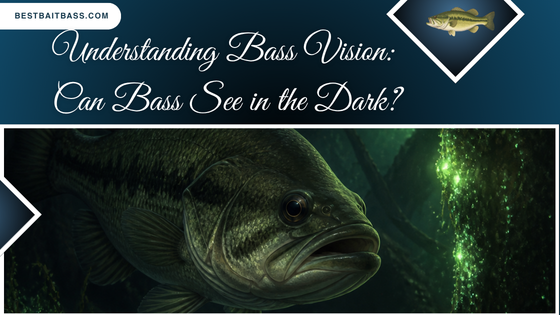
To answer directly: yes, bass can see quite well in the dark, provided there is at least a minimal ambient light source. Whether illuminated by moonlight, starlight, or nearby dock lights, bass possess far superior low-light vision compared to humans. Their eyes have evolved to maximize whatever ambient light penetrates the water’s surface, allowing them to track moving prey with impressive accuracy.

However, it is crucial to understand that sight is only one part of their nocturnal hunting arsenal. While bass rely primarily on visual cues during bright mid-day hours, their visual reliance shifts at night. They use their eyes to locate contrast and silhouettes, but they rely heavily on auxiliary senses like the lateral line system and inner ear to detect vibrations and water displacement before striking.

Why Bass Can See So Well at Night: The Science of Predatory Vision

To truly grasp why bass can see so well at night, we must look into the biological structure of their eyes. Bass eyes share similarities with human eyes, but their internal sensory makeup is tuned specifically for aquatic low-light environments.

Rods vs. Cones in the Bass Eye

Like humans, the retina of a bass contains two main types of photoreceptor cells: cones and rods. Cones are responsible for color perception and high-resolution detail in bright light. Rods, on the other hand, are highly sensitive light detectors responsible for monochromatic vision in low-light conditions.

During the day, bass extend their cone cells forward while retracting rod cells to process vivid colors like green, red, and yellow. As ambient light fades during dusk, a biological process shifts the rod cells forward while pulling the color-sensitive cones back. This transition allows bass to capture maximum available light particles, enabling them to form sharp monochromatic images even in dim water.

Large Pupil Size and Fixed Lenses

Unlike humans, bass do not have irises that contract or dilate to control light entering the eye. Their pupils remain permanently wide open. This fixed, large pupil structure allows maximum light entry at all times, making them naturally adept at gathering light in low-visibility environments like murky water or deep moonlit bays.

The Lateral Line System: A Secondary Visual System

While not an actual optical organ, the lateral line acts as a visual map for bass in the dark. Running along both sides of the bass’s body, this specialized nerve network detects tiny pressure waves and vibrations in the water column. When a bass turns toward a lure in complete darkness, it is often reacting to a visual silhouette confirmed by its lateral line sensing the lure’s movement.

Can Bass See in Complete Darkness?

The short answer to whether can bass see in complete darkness is no—photoreceptors require photons of light to function. In absolute darkness, such as a sealed cave or a pitch-black laboratory tank with zero lux of light, a bass cannot see visually.

However, in nature, “complete darkness” rarely exists near the surface of natural bodies of water. Even on cloudy, moonless nights, ambient light from starlight, atmospheric glow, and shoreline reflection penetrates the top few feet of the water column. In these real-world conditions, bass still retain enough light to spot silhouettes above them.

Furthermore, even when visual acuity drops to near zero, bass still hunt effectively using sound and vibration. This is why topwater buzzbaits and noisy dark jigs remain highly effective on pitch-black nights.

What Do Bass Actually See at Night?

Anglers often wonder: what do bass actually see at night? Do they see colors, shapes, or just blurry shades of gray? Science shows that as light levels decline, color recognition fades rapidly. Bass lose the ability to distinguish subtle color variations such as green pumpkin vs. watermelon red.

Instead, bass see high-contrast silhouettes framed against the slightly brighter surface of the water or the night sky. To a bass looking upward at night, a dark lure stands out sharply against the ambient glow of the surface.

Black and Dark Colors: The Ultimate Night Choice

It might seem counterintuitive to use a black or dark blue lure at night, but black creates the strongest, crispest silhouette against a dim sky. Light-colored or clear lures allow light to pass through them, making them appear washed out and harder for bass to target in low light.

The Impact of Moonlight and Water Clarity

Moonlight plays a massive role in how far bass can see. On full moon nights, bass have significantly expanded sight distance and may target faster-moving lures in clear water. On dark or overcast nights, their visual field shrinks, requiring slower presentations that stay in their strike zone longer.

Night Condition Moonlight Level Potential Visibility Recommended Lure Types Recommended Color Palette
Full Moon / Clear Water High (75-100%) Higher Visibility Buzzbaits, Poppers, Spinnerbaits Solid Black, Dark Blue/Black, White (Topwater)
Half Moon / Partial Cloud Cover Medium (30-70%) Moderate Visibility Colorado Blade Spinnerbaits, Chatterbaits Black & Blue, Dark Purple, Junebug
New Moon / Heavy Overcast Minimal (0-20%) Limited Visibility Loud Wakebaits, Large Texas-Rigged Worms Jet Black, Solid Blue/Black with Rattles
Muddy or Stained Water Variable Very Limited Visibility Heavy Vibrating Jigs, Noisy Topwater Lures Black with Brass Rattles, High-Contrast Black/Red

Note: Visibility levels are general fishing guidelines based on available ambient light, water clarity, and bass sensory behavior. Bass also rely heavily on their lateral line system to detect vibration and movement when visibility is reduced.

Optimizing Your Night Fishing Strategy Based on Bass Vision

Knowing how bass see at night allows you to adjust your approach for maximum success. Here are proven tactics tailored to bass nocturnal vision mechanics:

1. Cast Toward the Ambient Light Source

When positioning your boat, keep the ambient light source (the moon or shoreline lights) behind the area you are fishing. Retrieve your lure so that it travels between the bass and the light. This maximizes the silhouette effect, making your lure easy for low-light hunting bass to spot.

2. Slow Down Your Retrieve

Because bass visual reaction distance is reduced at night, fast retrieves can cause fish to miss your bait entirely. Give bass extra time to home in on the lure by utilizing steady, methodical retrieves or adding extended pauses when fishing topwater lures or slow-rolling a jig.

3. Combine Vibration with Silhouette

Since bass pair their visual sight with their lateral line at night, the best lures offer both high contrast and strong vibration. Large Colorado blade spinnerbaits thump heavily in the water while casting a wide black shadow—making them one of the deadliest night fishing lures of all time.

Conclusion

Understanding whether bass can see in the dark comes down to recognizing their sensory balance. While bass cannot see in total biological darkness, their eyes are exceptionally adapted to pull in minimal ambient light, allowing them to locate targets using contrast and silhouettes. By pairing their impressive low-light vision with their sensory lateral line, bass remain lethal apex predators long after sunset.

To catch more bass at night, simplify your tackle box. Choose dark, high-contrast colors like black and dark blue, select lures that push water and generate sound, and slow down your retrieve. Put these science-backed techniques to work on your next late-night outing and experience the thrill of explosive nocturnal bass strikes!
Filed Under: Bass Fishing Questions Answered Tagged With: Bass Behavior, Bass Facts, BASS FISHING, Bass Science, Bass Vision, Fishing Techniques, Largemouth Bass, Night Fishing

The Ned Rig Guide: Why Less is More for Finesse Bass Fishing

July 27, 2026 By best bait bass

There is an old adage in angling that to catch bigger fish, you need to use bigger lures. While that might hold true when you are hunting trophy-class predators on active feeding cycles, there comes a time on every body of water when the traditional playbook fails. Cold fronts roll in, recreational boat traffic peaks, or recreational pressure turns otherwise aggressive largemouth and smallmouth bass into tight-lipped, highly suspicious spectators. This is where finesse bass fishing saves the day, and no tactic in the modern era has revolutionized this category quite like the Ned rig.

ned rig fishing

At first glance, the Ned rig looks almost laughable. It consists of a small, blunt-cut chunk of soft plastic matched with a light, open-hook jig head. It does not possess flashy spinner blades, loud internal rattles, or a hyperactive paddle tail. Yet, despite its unassuming profile, ned rig fishing has become an indispensable technique for professional tournament anglers and weekend warriors alike. The secret lies in its minimalism. By presenting an easy, highly realistic, and vulnerable meal, this rig coaxes bites from bass that would otherwise ignore every other presentation in your tackle box.

Understanding the Ned Rig Phenomenon

To truly master the Ned rig, you must first understand the philosophy behind it. Pioneered by legendary outdoor writer Ned Kehde, this style of fishing—originally referred to as “Midwest Finesse”—was designed to catch high numbers of bass in heavily pressured public reservoirs. The core concept is simple: present a small, slow-moving bait that mimics natural forage like crawfish, insects, or dying minnows.

The Origins of Midwest Finesse

Ned Kehde developed this system using customized tackle, often cutting larger soft plastics in half to create smaller profiles. He realized that bass in highly pressured lakes quickly learn to avoid large, fast-moving artificial lures. By scaling down the presentation and fishing it on incredibly light line, Kehde found he could trigger consistent bites even on the toughest days of the year.

Why Bass Can’t Resist the “Do-Nothing” Action

Unlike active swimbaits, the Ned rig relies heavily on a “do-nothing” subtle appeal. When the rig rests on the bottom, the buoyant soft plastic stands straight up, shaking slightly with the natural movement of the water current. To a bass, this upright posture perfectly replicates a defensive crawfish or a small baitfish feeding on the bottom. The lack of aggressive movement is precisely what makes it so non-threatening and irresistible.

Essential Gear for Ned Rig Fishing

While the Ned rig is incredibly simple, using the correct tackle is non-negotiable. Because you are throwing exceptionally light baits, a heavy baitcasting setup will only result in frustration and nested lines. Succeeding with this technique requires a dedicated spinning tackle setup designed for maximum sensitivity.

The Perfect Rod and Reel Setup

A medium-light power spinning rod with a fast action tip is the gold standard for ned rig fishing. The soft tip allows you to cast lightweight jig heads accurate distances, while the medium-light backbone provides enough power to drive the thin-wire hook home and steer bass away from structure. Pair this rod with a high-quality 2500 or 3000-sized spinning reel featuring a smooth drag system to handle sudden, powerful runs.

Line Selection: Fluorocarbon vs. Braided Main Line

Most elite anglers prefer spooling their spinning reels with a main line of 8 to 15-pound test braided line, tied to a long leader of 6 to 8-pound test fluorocarbon. The braided main line offers zero stretch and exceptional sensitivity, allowing you to feel every pebble, transition, and subtle bite. The fluorocarbon leader provides the stealth needed in ultra-clear water, ensuring suspicious bass do not spot your line.

Selecting the Best Ned Rig Baits and Jigs

Not all soft plastics and jig heads are created equal. To maximize your success, you must pair the right hook with the best ned rig baits. The market is filled with options, but understanding material properties is key.

Soft Plastic Profiles and Materials

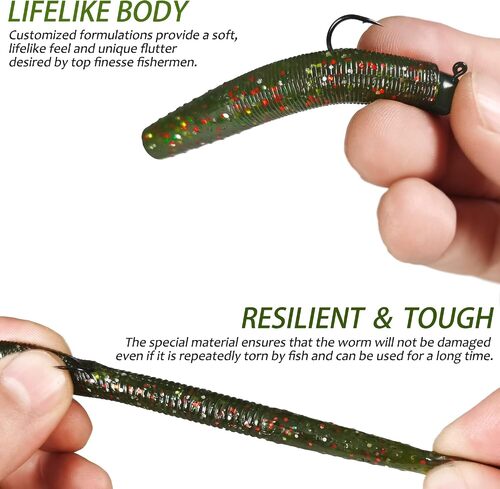
The most critical advancement in Ned rig fishing was the introduction of hyper-buoyant, tear-resistant materials like ElaZtech. Traditional plastisol baits sink flat to the bottom, whereas ElaZtech baits naturally float. This buoyancy is crucial because it keeps the tail of your bait pointing upward at rest. Popular profiles include straight stick worms, ribbed craw profiles, and miniature creature baits.

Jig Head Shapes and Weedless Options

The classic Ned rig jig head features a mushroom-shaped head. This design is engineered to keep the bait standing upright when it contacts the bottom. For fishing around heavy vegetation, brush, or timber, look for jig heads equipped with light wire weedguards. These guards prevent snagging while remaining soft enough to easily collapse when a bass strikes, ensuring a solid hookset.

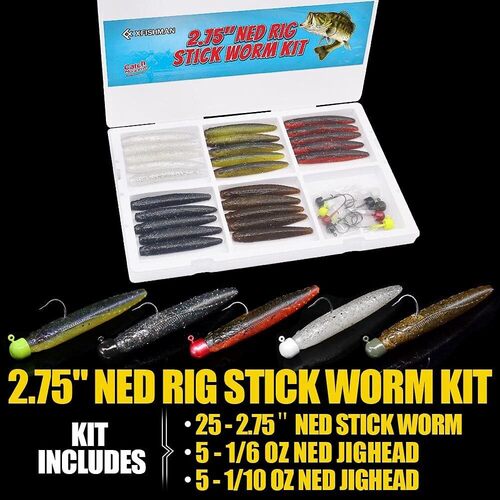
Ned Rig Kit

Check Price

How to Fish a Ned Rig: Master the Retrieval Techniques

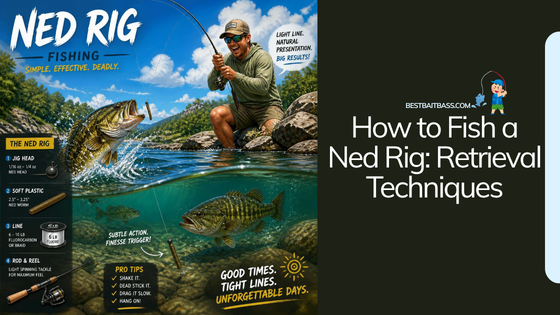
Knowing how to fish a ned rig boils down to patience and reading the water. Unlike fast-moving search baits, you must slow down your presentation to let the lure do the work for you. There are three primary retrieval methods that consistently put bass in the boat.

The Classic Drag and Shake

Cast your rig out and allow it to sink to the bottom on a completely slack line. Once it makes contact, slowly drag the bait along the bottom by sweeping your rod tip to the side. As you drag, gently shake your rod tip to transmit subtle vibrations down to the bait. Stop, wind up the slack, and repeat. Many bites occur during the pause immediately following a drag.

The Swim and Glide

This technique is highly effective when bass are suspended off the bottom or feeding on baitfish. After casting, begin a slow, steady reel turn while keeping your rod tip raised. Allow the bait to glide through the middle of the water column, occasionally stopping your retrieve to let the rig slowly spiral back down toward the bottom.

The Hop and Fall

If you are fishing over rocky bottoms or submerged structures, hopping the rig can trigger aggressive reaction strikes. Snap your rod tip upward to lift the jig head a foot or two off the bottom, then let it fall back down on a semi-slack line. Watch your line closely as the bait falls, as bass will often grab it on the descent.

60 pcs ned rig soft worms kit

Check Price

Comparing Finesse Tactics

To help you decide when to tie on a Ned rig versus other popular finesse bass fishing options, refer to the comparative table below:

Technique Ideal Depth Best Structure/Cover Action Level Target Bass Activity
Ned Rig 1 – 20 feet Gravel, Rocks, Clay Low / Subtle Highly Lethargic to Neutral
Drop Shot 10 – 50 feet Deep Ledges, Humps Medium / Shaking Suspended or Bottom-Hugging
Wacky Rig 1 – 10 feet Docks, Overhanging Trees Medium / Fluttering Shallow & Actively Cruising
Shaky Head 5 – 25 feet Brush Piles, Rock Piles Medium / Constant Shake Foraging on Bottom

Seasonal Strategies for Ned Rig Success

The beauty of this system is its year-round efficacy. No matter the season, a variation of this downsized presentation will produce bites.

Spring Cold Fronts

During the spring, pre-spawn bass are prone to moving shallow only to be pushed deep again by sudden cold fronts. When these atmospheric changes occur, the fish become incredibly lethargic. Pitching a Ned rig to the first break line outside of spawning flats is an incredibly effective way to salvage a tough spring day.

Summer Lull and Deep Structure

As water temperatures soar, bass migrate to deeper structures like main-lake points, humps, and ledge systems. While deep diving crankbaits and heavy jigs work when fish are active, they can quickly scare off school residents. Dragging a light Ned rig through these deep offshore areas will trigger consistent bites from pressured summer schools.

Fall Transitions and Winter Lethargy

In autumn, bass follow baitfish into shallow creeks. Matching your Ned rig bait color to the local forage can prove deadly. When winter arrives and water temperatures plummet, a bass’s metabolism slows down to a crawl. The slow, delicate presentation of a Ned rig allows you to fish slow enough to match their sluggish winter pace.

Conclusion: Embracing the Finesse Revolution

In a sport often dominated by high-speed boats, heavy tackle, and loud lures, the Ned rig stands as a testament to the power of subtlety. By choosing to downsize your gear and slow down your approach, you unlock a highly consistent method for catching bass under the most challenging conditions. Keep your tackle light, choose high-quality buoyant baits, and never underestimate the power of doing absolutely nothing on the water. Tie on a Ned rig during your next outing, and experience firsthand why less is truly more in the world of bass fishing.

Filed Under: Bass Fishing, Best bass lures Tagged With: BASS LURES, Finesse Fishing, Fishing Techniques, Ned Rig, Soft Plastics

Primary Sidebar

Product categories

  • Fishing Gifts
  • Bass Fishing Gear
    • Fishing Rod and Reel Combos
    • Fishing Tackle Boxes and Bags
    • Fishing Line
    • Complete Fishing Set
    • Fishing Reels
    • Lures
    • Fishing Storage Rack
    • Fishing Line Spooler
    • Fishing Rods

Recent Posts

  • Can Bass See in the Dark? Night Fishing Vision & Science Explained
  • Do Bass Sleep? What Science Reveals About Bass Resting Behavior
  • The Finesse Revolution: How to Catch Pressured Bass with Micro Ned Rigs
  • Lightweight Fishing Kayaks: Reviews and Best Models
  • Cold-Water Kayak Bass Tactics: Navigating Winter Creeks and Small Lakes

Affiliate Disclaimer

BestBaitBass.com is a participant in the Amazon Services LLC Associates Program, an affiliate advertising program designed to provide a means for sites to earn advertising fees by advertising and linking to (“Best Bait Bass” (amazon.com, or endless.com, MYHABIT.com, SmallParts.com, or AmazonWireless.com).

Footer

Categories

  • Bass Fishing (21)
  • Bass Fishing Questions Answered (2)
  • Best bass lures (12)
  • Best Bass Lures By Season (4)
  • Best Reels (2)
  • Crankbait (2)
  • Fishing Gear (2)
  • Fishing Techniques (2)
  • Jerkbaits (1)
  • Jigs (1)
  • Spinnerbaits (2)
  • Swimbaits (2)
  • Topwater lures (2)
  • Worms (1)
can bass see in the dark

Can Bass See in the Dark? Night Fishing Vision & Science Explained

do bass sleep

Do Bass Sleep? What Science Reveals About Bass Resting Behavior

micro ned rig

The Finesse Revolution: How to Catch Pressured Bass with Micro Ned Rigs

best lightweight fishing kayaks

Lightweight Fishing Kayaks: Reviews and Best Models

Products

  • ecooda black hawk II fishing reel for saltwater and freshwater with high strength aluminum body and spool ECOODA Black Hawk II Fishing Reel for Saltwater and Freshwater with High Strength Aluminum Body and Spool
  • plusinno fishing lures set with 102 pieces fishing lure tackle PLUSINNO Fishing Lures Set with 102 Pieces Fishing Lure Tackle
  • Magreel Fishing Rod and Reel Combo with EVA Carried Bag Magreel Fishing Rod and Reel Combo Telescopic Carbon Fiber Set with Fishing Line, Fishing Lures Kit
  • entsport camo legend 2-piece casting rod 7 graphite portable baitcasting fishing rod travel design Entsport Camo Legend 2-Piece Casting Rod Graphite Portable Baitcasting Fishing Rod
  • kastking exergy floating fly fishing lines with silky smooth kastkote surface and biodegradable biospool KastKing Exergy Floating Fly Fishing Lines with Silky Smooth KastKote Surface and Biodegradable BioSpool

Tags

BASS Bass Activity BASS BAIT BASS BAITS Bass Behavior Bass Facts BASS FISHING BASS FISHING BAITS BASS FISHING LURES BASS LURE BASS LURES Bass Science Bass Sleep Bass Vision BEST BAIT FOR BASS FISHING BEST BAITS FOR BASS BEST BAITS FOR BASS FISHING BEST BASS FISHING BAIT BEST BASS FISHING LURE BEST LURE FOR BASS BEST LURES FOR BASS BEST LURES FOR BASS FISHING DIY fishing lures Finesse Fishing fishing gear fishing reels Fishing Techniques fishing tips heavy cover fishing Kayak Fishing Largemouth Bass Lure Techniques Ned Rig Night Fishing pressured bass Smallmouth Bass Soft Plastics SPINNERBAIT Swimbaits TEXAS RIG tokyo rig Topwater lures vertical jigging Walking Baits winter bass fishing

© 2026 Best Bass Fishing Lures
 · Powered by BestBaitBass.com