• Skip to primary navigation
  • Skip to main content
  • Skip to primary sidebar
  • Crankbait
  • Spinnerbaits
  • Jigs
  • Swimbaits
  • Topwater lures
  • Jerkbaits
  • Worms

Best Bait For Bass

Best Bass Baits, Lures - Best Spinning Reels - Best Rods and Best Lines for Bass. Everything for Bass Fishing


  • Home
  • Bass Baits and Lures
  • Shop

BASS FISHING

Topwater Walking Baits: Mastering the ‘Walk the Dog’ Retrieve

July 29, 2026 By best bait bass

There is nothing quite as electrifying in the sport of bass fishing as the moment a lunker erupts from the depths to annihilate a lure skittering across the surface. Topwater bass fishing is more than just a technique; it is a visceral experience that tests a angler’s nerves and reflexes. Among the various topwater presentations, the ‘walk the dog’ retrieve stands out as the gold standard for triggering aggressive strikes from both active and neutral fish.

Mastering this erratic, side-to-side motion requires patience, practice, and the right equipment. Whether you are a weekend warrior or a tournament professional, understanding how to manipulate your lure to mimic a distressed baitfish is a skill that will consistently put more bass in the boat throughout the warmer months of the year.

walk the dog fishing

The Art of Topwater Bass Fishing

Fishing topwater lures requires a departure from traditional bottom-bouncing tactics. Instead of waiting for a subtle tick on your line, you are hunting for reaction strikes. When you employ the best topwater retrieve, you are essentially daring a bass to strike. The sight of a fish crashing the surface is addictive, but it requires the angler to maintain composure, waiting until the weight of the fish is felt before setting the hook.

Why Walking Baits Dominate

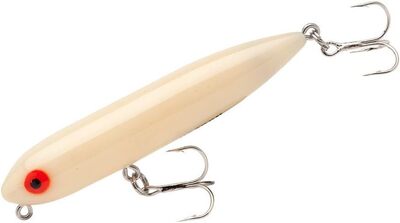
Walking baits, often referred to as cigar-shaped topwaters, are designed to glide in a zig-zag pattern. This motion is difficult for bass to ignore because it mimics a dying or fleeing baitfish perfectly. Unlike poppers, which create significant surface disturbance, walking baits can be worked with a subtle rhythm or a frantic pace to match the mood of the fish.

Walk the Dog Lure

Check Price

Understanding the Walk the Dog Retrieve

To effectively walk the dog, you must create a rhythmic cadence between your rod tip and your reel. The retrieve is achieved by twitching your rod tip downward in short, controlled snaps while simultaneously reeling in the slack created by each twitch.

Troubleshooting Your Rhythm

Many beginners struggle with the lure either spinning in circles or failing to move side-to-side. The key is the slack. If you keep the line too tight, the lure will travel in a straight line toward the boat. If you manage the slack properly, the lure snaps from left to right, covering water effectively. It is recommended to start slow, focusing on the twitch-pause-twitch rhythm rather than speed. Speed comes naturally once you develop muscle memory.

Comparison of Topwater Lure Styles

Lure Category Primary Action Best Condition Sound Profile
Walking Bait Side-to-side Glide Calm to Light Chop Knocker/Rattle
Popper Cup-face Splash Calm/Targeted Cover Loud Pop
Prop Bait Spinning Propeller Overcast/Low Light Constant Whir

Essential Gear for Topwater Success

Your rod, reel, and line choice play a massive role in how well your lure performs. A rod that is too soft will absorb the energy of your twitches, making it impossible to walk the lure correctly. Conversely, a rod that is too stiff may cause you to rip the hooks out of the fish’s mouth on the set.

Rod and Line Selection

A medium-heavy power rod with a fast action is ideal for most walking baits. This provides enough backbone to cast long distances while keeping enough tip sensitivity to twitch the lure effectively. Regarding line, monofilament is often preferred over fluorocarbon for topwater. Because monofilament floats, it prevents the nose of the lure from being dragged underwater, which is a common issue with sinking fluorocarbon lines.

topwater walking lure

Check Price

Environmental Factors and Seasonal Timing

Topwater fishing is largely a game of temperature and light. Bass are sight predators, and while they can track lures by sound, they are most aggressive when they can clearly track the bait near the surface. Early morning and late evening are prime times, as is overcast weather throughout the day.

Targeting Cover and Structure

Focus your efforts on the transition zones between shallow flats and deeper water. Bass often use these depth changes as staging areas. Walking baits are particularly effective when retrieved parallel to weed edges, boat docks, or over submerged grass beds where bass are waiting to ambush prey.

Conclusion

Mastering the walk the dog retrieve is a transformative milestone for any bass angler. By focusing on your rod cadence, maintaining slack in the line, and choosing the right monofilament gear, you can unlock the full potential of your walking baits. Remember that topwater fishing is about consistency and confidence; keep your retrieve steady, watch your lure closely, and prepare for the adrenaline rush of the strike. The next time you hit the water, dedicate time to perfecting this classic technique and enjoy the explosive rewards it brings.

Filed Under: Fishing Techniques Tagged With: BASS FISHING, fishing tips, Lure Techniques, Topwater lures, Walking Baits

Summer Topwater Tactics: The Ultimate Guide to Working a Whopper Plopper

July 22, 2026 By best bait bass

There is nothing quite like the heart-stopping explosion of a bucketmouth bass shattering the surface of the water in the heat of a summer afternoon. As water temperatures rise, bass often retreat to the shallows or cruise near baitfish schools, making them prime targets for topwater bass lures. Among the many options in an angler’s tackle box, the Whopper Plopper has emerged as a undisputed king of surface-churning action. By combining the versatility of a prop bait with the erratic profile of a wake bait, it triggers aggressive strikes that are as visual as they are rewarding.

Whopper Plopper

Why the Whopper Plopper Dominates Summer Bass Fishing

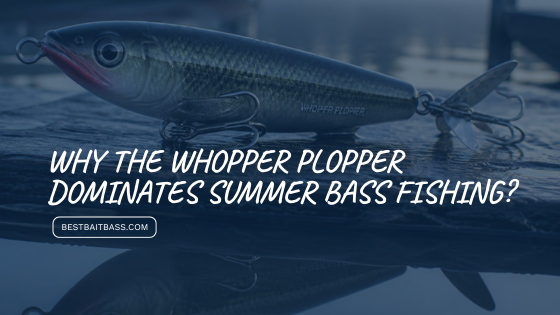
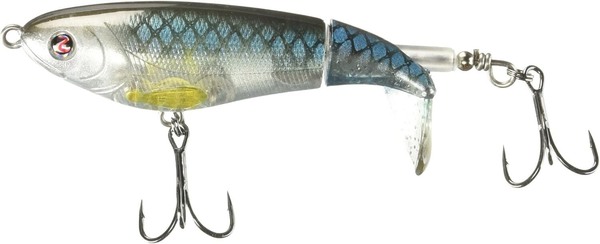
The secret to the Whopper Plopper lies in its unique tail design, which rotates to create a distinct ‘plopping’ sound that mimics struggling prey. During the summer, bass are highly active and rely heavily on vibration and sound to hunt in murky or stained water. Unlike traditional poppers that require specific pauses, the Whopper Plopper excels at covering vast amounts of water efficiently. Whether you are targeting weed lines, dock pilings, or submerged timber, the bait’s ability to stay on top regardless of retrieval speed makes it a must-have for summer bass fishing.

Targeting Transition Zones

To maximize your success, focus on transition areas such as points leading into coves or the edges of lily pad fields. In the early morning and late evening, bass often push baitfish into these shallow areas. By casting parallel to these structures, you keep your lure in the strike zone longer, increasing the odds of a big strike.

Understanding the Best Topwater Retrieve

Many beginners make the mistake of reeling a Whopper Plopper like a standard spinnerbait. While a steady retrieve works, the best topwater retrieve involves variation. Start with a slow, rhythmic retrieve to allow the tail to engage fully, creating that signature gurgling sound. If you don’t get a strike, try incorporating brief pauses or slight twitches of the rod tip to make the lure appear wounded and vulnerable. Bass are opportunistic feeders, and the ‘stop-and-go’ technique often triggers a reflex strike from a following fish that was previously undecided.

Essential Gear for Whopper Plopper Success

When fishing topwater baits, your gear setup is just as important as your technique. Because the Whopper Plopper has a wide profile and creates significant resistance, a medium-heavy casting rod with a moderate-fast action is ideal. This allows for enough backbone to set the hook, while the moderate tip ensures you don’t pull the lure out of the fish’s mouth during the initial strike. Pair this with a high-speed reel to quickly pick up slack line once a fish commits.

The Importance of Line Choice

Monofilament is generally preferred for topwater fishing because it floats, which prevents the nose of the lure from diving or pulling under the surface. If you must use braided line, ensure you add a monofilament leader to keep the lure riding high.

Whopper Plopper topwater fishing lure
Check Price


Comparing Whopper Plopper Sizes for Success

Choosing the right size depends on the local forage and the aggression level of the bass. Below is a quick comparison table to help you select the right model for your day on the water.

Size Best Application Water Conditions Retrieve Style
75 Finesse / Small Forage Clear Water / Calm Subtle / Slow
90 All-Purpose Varied Variable
110 Large Baitfish / Active Bass Stained / Windy Aggressive
130 Big Fish / Heavy Cover Murky / Rough Loud / Steady

Conclusion: Mastering the Surface Strike

The Whopper Plopper is more than just a lure; it is a versatile tool that can turn a slow summer day into a trophy-filled outing. By understanding the importance of your retrieval speed, choosing the right gear, and matching the size to your local conditions, you will significantly improve your efficiency on the water. Remember, the key to successful topwater fishing is patience. Do not set the hook the instant you hear the splash; wait until you feel the weight of the bass on your line. Now, get out there, start casting, and experience the thrill of the topwater explosion for yourself.

Filed Under: Bass Fishing, Topwater lures Tagged With: BASS FISHING, lure tactics, summer fishing, Topwater lures, Whopper Plopper

Megabass Dark Sleeper Hacks: 5 Rigging Secrets for Heavy Cover Bass

July 21, 2026 By best bait bass

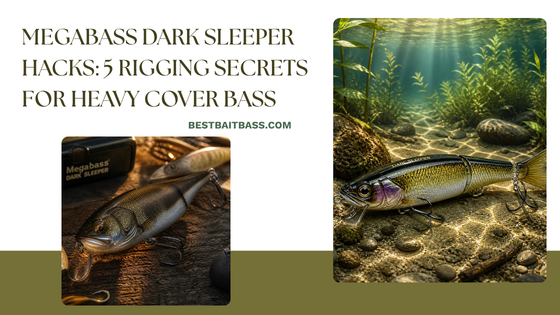
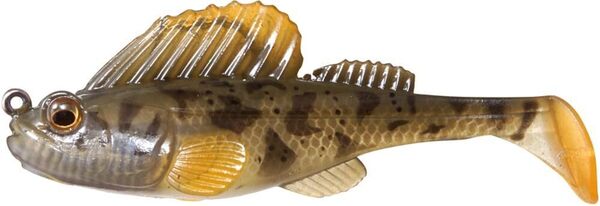
The Megabass Dark Sleeper is arguably one of the most versatile baits in a modern angler’s tackle box. Designed to mimic a bottom-dwelling goby or bullhead, its unique dorsal fin housing the hook makes it a natural for fishing around rocks and stumps. However, for those willing to experiment, this lure holds untapped potential when modified correctly. By mastering Megabass Dark Sleeper modifications, you can turn a standard swimbait into a weedless powerhouse capable of dragging through the thickest grass mats and timber piles where giant bass lie in wait.

Megabass Dark Sleeper

Mastering the Art of Bottom-Hugging Swimbait Fishing

To truly appreciate the Dark Sleeper, you must understand how it interacts with the lake bottom. Unlike traditional swimbaits that require a constant retrieve, the Dark Sleeper is designed to be crawled, hopped, and dragged. Its internal weight distribution ensures the bait maintains a nose-down posture, which is critical for triggering strikes from lethargic or structure-oriented bass.

Why Structure Matters

Bass utilize heavy cover not just for protection, but as a primary hunting ground. By placing your lure exactly where the fish are hiding, you maximize the probability of an impulse strike. The Dark Sleeper’s design allows it to deflect off hard cover, but navigating soft, submerged vegetation often requires some extra ingenuity.

Essential Megabass Dark Sleeper Modifications for Dense Vegetation

When standard rigging fails in heavy hydrilla or milfoil, it is time to look at custom modifications. One of the most effective weedless swimbait hacks involves “trimming the profile.” By carefully thinning out the bottom edges of the side fins, you can reduce the surface area that catches on weeds, allowing the bait to slide through grass with less resistance.

The Super Glue Technique

Another common modification is ensuring the dorsal fin stays secure against the body during the cast. Using a tiny dab of high-quality, water-proof cyanoacrylate (super glue) at the very base of the fin can ensure it stays flush until a fish strikes, at which point the soft plastic easily compresses to expose the hook. This prevents snagging on debris during the retrieve.

Megabass Dark Sleeper Swimbait

Buy on amazon


Strategic Rigging Secrets for Heavy Cover Performance

When you are rigging swimbaits for cover, the line-to-bait connection is just as important as the lure itself. Many anglers find that using a high-strength fluorocarbon leader helps with abrasion resistance when pulling the bait out of gnarly timber. Below is a comparison table outlining how to select the right weight class of Dark Sleeper for different cover types.

Cover Type Dark Sleeper Size Recommended Retrieve Retrieval Speed
Sparse Rocks 3.0 inch Hopping / Dragging Slow
Thick Grass 3.8 inch Swimming / Dragging Moderate
Heavy Timber 3.0 or 3.8 inch Deflecting / Bumping Fast
Deep Rip-Rap 2.4 inch Steady Crawl Very Slow

Fine-Tuning Your Presentation

If you find the bait is getting hung up too often, try downsizing the weight of the swimbait relative to the cover density. A lighter version of the Dark Sleeper can be “skipped” under overhanging branches or docks, providing a presentation that standard jig heads simply cannot replicate.

Optimizing Your Setup: Gear Recommendations

Success with these modifications requires the right gear. A medium-heavy power rod with a fast action is essential for driving the hook home through the dorsal fin housing and into the bass’s jaw. Pair this with a high-gear-ratio reel to ensure you can pull a large fish out of thick vegetation before it wraps you up.

Line Selection

For heavy cover, do not skimp on line strength. 15-20 lb test fluorocarbon or 40-50 lb braided line is the standard. If you are fishing clear water, use a fluorocarbon leader tied to your braid to maintain the stealthy presentation that makes the Dark Sleeper so deadly.

Conclusion: Level Up Your Swimbait Game

Mastering Megabass Dark Sleeper modifications is a journey of trial and error that pays off in big catches. By focusing on weedless rigging, proper gear selection, and understanding how to effectively present the bait in heavy cover, you significantly increase your efficiency on the water. Don’t be afraid to experiment with your own hacks; the best way to catch more bass is to offer them something they haven’t seen before. Get out there, test these secrets, and watch your catch rate soar.

Filed Under: Bass Fishing, Swimbaits Tagged With: BASS FISHING, Dark Sleeper, fishing tips, Megabass, Swimbaits

Fishing Reel Gear Ratio Chart & Guide (2026): Choose the Perfect Speed

July 16, 2026 By best bait bass

Mastering your retrieve is the secret weapon of professional anglers. If you have ever wondered why your buddy is catching more bass while using the same lure, the answer often lies in the mechanics of their reel. Understanding fishing reel gear ratio is the difference between a sluggish retrieve and a strike-inducing presentation. Whether you are burning topwater lures or finessing deep-diving crankbaits, choosing the right speed is paramount. In this guide, we break down everything you need to know about gear ratios to ensure your 2026 fishing season is your most successful one yet.

Fishing reel gear ratio chart

What Does Gear Ratio Mean in Fishing Reels?

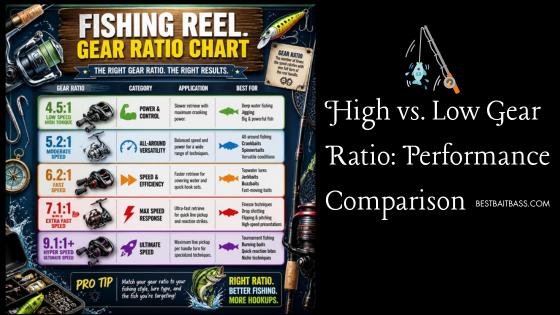
At its simplest, a fishing reel gear ratio represents how many times the spool rotates for every single turn of the reel handle. A ratio of 6.4:1 means the spool rotates 6.4 times for one full crank of the handle. This number dictates your retrieval speed, torque, and how much effort you need to exert to pull a fish out of heavy cover.

Understanding the Fishing Reel Gear Ratio Chart

To simplify things, refer to this basic classification:

1. Low Gear (4.0:1 to 5.4:1): High torque, lower speed. These provide more torque and are often referred to as “power” gears. They require less effort to reel in heavy baits or fight against the resistance of deep-diving lures.

2. Mid Gear (5.5:1 to 6.4:1): Versatile, all-purpose speed. These are the “all-purpose” workhorses. They provide a versatile balance between speed and control.

3. High Gear (7.0:1 to 10.1:1): High speed, lower torque. These are speed demons, allowing you to take up slack line instantly or bring lures back to the boat quickly for repeated casts.

How to Choose the Right Fishing Reel Gear Ratio

When selecting your setup, ask yourself: What lure am I throwing? The resistance of the bait in the water should dictate your choice. High-drag lures like deep-diving crankbaits require lower gear ratios to prevent angler fatigue, while reaction baits like jigs or topwaters benefit from the high-speed pickup of faster reels.

Low Gear Ratio Reels: Power and Control

Low gear ratio reels are your workhorses. They offer significant mechanical advantage, making them the best fishing reel gear ratio for lures that create high resistance. These reels allow you to maintain a slow, steady, and methodical retrieve, which is crucial when fishing in cold water or when bass are lethargic.

High Gear Ratio Reels: Speed and Efficiency

Fast gear ratio reels are essential for techniques requiring a quick line pickup. If you are fishing topwater baits, a high gear ratio allows you to eliminate slack instantly after a missed blowup or to quickly pull a fish away from thick vegetation. They are also indispensable for “burning” spinnerbaits over grass beds.

Expert Advice: Best Gear Ratios for Common Techniques

* Deep Crankbaits: 5.4:1 to 6.2:1 (Reduces torque and fatigue)

* Topwater Fishing: 7.5:1 to 8.5:1 (Quick line management)

* Jigs & Texas Rigs: 7.1:1 to 7.5:1 (Fast slack removal)

* Spinnerbaits: 6.4:1 to 7.1:1 (Versatile speed)

By matching your gear ratio to your specific technique, you increase your efficiency on the water and your overall strike conversion rate. Always consider the cover, the water temperature, and the specific lure action when selecting your next reel.

Conclusion

Mastering your understanding of gear ratios transforms how you interact with your lures and your targets. Remember that there is no single “best” ratio, but rather the right ratio for the job at hand. Start by building your collection with a versatile 7.1:1 reel for general tasks, and slowly expand into specialized low-gear reels for crankbaits and high-gear reels for precision work. By matching your equipment to your technique, you ensure that you are always in total control of your presentation, leading to more bites and more fish in the boat.

Filed Under: Bass Fishing, Best Reels Tagged With: BASS FISHING, bass tackle, fishing gear, fishing reels, fishing tips, high gear ratio reels, low gear ratio reels

Baitcasting vs Spinning Reels for Bass: Choosing the Right Setup for Your Technique

July 13, 2026 By best bait bass

Every angler reaches a crossroads: do you stick with the familiar spinning reel, or do you commit to the precision of a baitcaster? Choosing the right tool for the job is the difference between a frustrating day of backlashes and hauling in a personal best. At BestBaitBass.com, we help you cut through the noise.

baitcasting vs spinning reels for bass

Understanding the Baitcasting vs Spinning Reel Debate

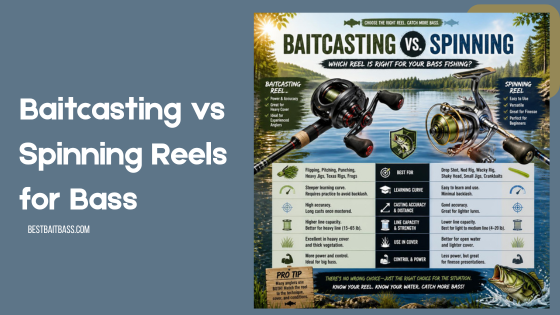
Selecting the right reel isn’t just about brand loyalty—it’s about matching your gear to your target technique. Baitcasters offer incredible power and accuracy, while spinning reels provide unmatched versatility for light lines and finesse tactics.

Why Choose a Baitcasting Reel for Bass Fishing?

Baitcasting reels are the workhorses of the professional bass world. They are designed for:

  • Heavy Covers: The robust construction handles thick vegetation and heavy lines.
  • Accuracy: Thumb control allows for pinpoint casting into tight pockets.
  • Power: Better torque for pulling large fish out of structure.

When to Use Spinning Reels for Bass

Don’t discard your spinning setup just yet. Spinning reels excel in scenarios where finesse is key:

  • Light Lures: Perfect for drop-shotting, shaky heads, or small jerkbaits.
  • Windy Conditions: Reduced line twist compared to casting reels in gusts.
  • Ease of Use: Ideal for beginners or for quick, low-maintenance casting.

Mastering Fishing Reel Gear Ratios

Understanding the fishing reel gear ratio is vital. The ratio indicates how many times the spool rotates per handle turn:

  • 6.3:1 (Mid-range): The “jack of all trades,” great for crankbaits and spinnerbaits.
  • 7.1:1 – 8.1:1 (High-speed): Essential for techniques that require quick line retrieval, like jigs or Texas rigs.
  • 5.4:1 (Low-speed): Designed for deep-diving crankbaits where pulling power is prioritized over speed.

Selecting Your Ultimate Bass Rod and Reel Setup

Your bass rod and reel setup should be balanced. Pair high-speed reels with fast-action rods for sensitivity, and match low-gear reels with composite or glass rods to provide “give” for moving baits. Always ensure your line strength matches the reel’s maximum drag capacity to prevent breakage.

Final Thoughts on Finding Your Perfect Bass Reel

Whether you prioritize the casting control of a baitcaster or the reliability of a spinning setup, the “best” bass fishing reel is the one that gives you confidence on the water. Start with a versatile 7:1 gear ratio, keep your rod action consistent, and get out there to land that next trophy.

Filed Under: Bass Fishing Tagged With: baitcasting tips, BASS FISHING, fishing gear, fishing reels, rod and reel, spinning reel guide

Chatterbait

March 11, 2018 By best bait bass

Chatterbait For Bass Fishing

The Chatterbait is undoubtedly among the most effective and unique fish catching lures that have been introduced to the market in recent times. It is essentially a bladed jig. The blade is the secret to the effectiveness of the Chatterbait. It is mostly used to cast out and then reel in, this is why it is referred to as the constant retrieve bass lures. It usually delivers in most occasions because of its versatility in fishing applications. An individual can fish it like a spinnerbait, a jig or even a lipless rattle crank bait. On retrieve, the blade is known to give off a clicking sound as well as exemplary vibration. The clicking sound and good vibration happen to be the most essential ingredients for fishing in dirty muddy water.

z man chaterbait

Chatterbait Secrets

The following are some of the secrets of fishing bass with the ideal bass baits i.e. Chatterbait:

Trailers – The ideal trailers to use are Gene Larew Biffle Bug, Gene Larew 4in Salt Craw and Gene Larew Sweet Swimmer. They can be attached to the hook using the gel version of Super Glue. Swimbait trailers are good to use with chatterbaits. Trailers improve the profile of chatterbaits and positively affect their performance. They also contribute to the vibration. Lastly, they contribute to the weight of the rig in cases where casting is a challenge.

Sizes and colors – The Green Pumpkin Chatterbait with a black blade in a 3/8 ounce is arguably the most popular and effective for that matter. The 1/4 ounce is ideal for shallow water while the 1/2 ounce for deep water.

Weather – It is advisable to go slower on the retrieve in colder weather as the fish are less active.

Fishing – On locating a strike zone, the bass lures should be retrieved as parallel to the shore as possible. Time at the strike/target zone should be maximized.

How To Use Chatterbait For Bass Fishing

The Chatterbait can be used for bass fishing in several ways. The following are some of the ways that an individual can explore the bass baits called Chatterbait with regard to bass fishing:

Chatterbait As Jig

When the Chatterbait is being used as a jig, the weight size should be given due consideration. The most effective sizes range between 3/8 oz and 5/8 oz. The color choice should lean towards darker colors such as green pumpkin, pumpkin, black/blue or brown/orange. These are the darker colors that are considered to be quite effective. The retrieve utilized should closely resemble the retrieve of a jig that is used normally. The weed guard model is ideal for heavy cover but the standard swim jig can successfully substitute it.

Chatterbait As Spinnerbait

The Chatterbait can also be worked as a spinnerbait. It can be slow rolled and retrieved at a constant medium retrieve or an individual can burn it by using a fast retrieve. The major advantage of the Chatterbait is that one does not have to be exemplary in using it so as to catch fish. A majority of fishermen utilize a standard cast and retrieve and manage to achieve excellent results.

Chatterbait As Swim Jig

The Chatterbait can also be worked as a swim jig. However, it should not be confused with other swim jigs as its blade is directly attached to the eye of the hook. The blade is designed in such a way that it wobbles to and fro while striking the head of the Chatterbait. This creates 2 things that attract fish, the clattering sound and the erratic wobbling action. The close the head and the bass baits are, the more enhanced the action will be.

Retrieving A Chatterbait

Everything depends on the retrieve. The Chatterbait’s blade to head design will cause it to come straight back in and erratically veer off course when retrieved. The instant darting action is a good strike getter. An ideal tip on retrieving a Chatterbait is every four or five turns of the reel handle interrupt the speed by which the retrieve is being done by quickly speeding up. This is what will result in the swim jig darting either right or left to produce a more erratic action.

Final Thoughts

The above insightful information vividly explains why bass lures called chatterbaits are often used for purposes of freshwater bass fishing and how to maximize on catches when utilizing the popular bass fishing lure. Their main strength lies in the variety of ways by which they can be retrieved and it goes without saying that versatility is the only thing in fishing.


Filed Under: Bass Fishing, Best bass lures, Crankbait, Spinnerbaits Tagged With: BASS, BASS BAIT, BASS BAITS, BASS FISHING, BASS FISHING BAIT, BASS FISHING BAITS, BASS FISHING LURES, BASS LURE, BASS LURES, BEST BAIT FOR BASS FISHING, BEST BAITS FOR BASS, BEST BAITS FOR BASS FISHING, BEST BASS FISHING BAIT, BEST BASS FISHING LURE, BEST BASS FISHING LURES, BEST LURE FOR BASS, BEST LURE FOR BASS FISHING, BEST LURES FOR BASS, BEST LURES FOR BASS FISHING, CHATTERBAIT, CRANKBAIT, SPINNERBAIT

The A-Z about Jigs Bass fishing baits

March 11, 2018 By best bait bass

It is beyond me to tell you how to become a better angler but the only thing would be to tell you the best bass lure to have and the rest is upon you. It is important as beginner that you know how to hit out the water and come back with a bucket full of bass. Ever gone for Jigs fishing? Well, this is simply using jigs bass baits. There is a tale that jigs are the long-time used bass baits and if you try them you may come to understand such an argument.

jigs

Why Are Jigs Considered Among The Best Bass Baits?

Fishermen like adventuring into new waters and it would also be in their nature to try new kinds of baits. The jigs have been long used by anglers and their returns have never disappointed. One would ask why that is so;

  • They are good for the big game: there is a popular saying that if you want a bigger bass then you just jig it. There is a lot of truth in this since jig lures are some of the best for big fish.
  • A rich variety: fishing grounds and conditions change with time. You need an adaptable bass lure to keep pace with the variance. A jig would be the best bet on this one.
  • Ease of use: you do not need an expert to show you how to use a jig. It is easy and you will be the best angler you ever wanted to be in a short while.

Basics To Using Jigs Bass Baits

The first thing you should know about this versatile bass bait is that it is the dropping kind. It is thus suitable for both deep and shallow fishing. It can trap a bass as it goes down or get it once it settles at the bottom. The best depth is between 0-6 feet since this is where you will get most of the bass. But do not be worried that you have not jigged something on your way; you can still have your fortune at the bottom. For shallow fishing, you cast the bait close to you while the deeper fishing will require you to cast it far away from you so as not to give away your position. Another important thing is to know how it feels when your jig is dropped, when it hits the bottom or when it is lifting from the bottom. These are skills that you will learn on the job.

Different Types of Jigs

As said earlier, the jigs come in a rich variety and you will be spoiled for choice. But here is the top 3 types that should be in your bass fishing accessories;

  • Swimming jigs: these are designed to a swimming like figure and bass will be tempted to attack. They look like a small aquatic organism escaping danger and that is what dupes the fish.’
  • Football jigging: they have a football-like knot at their end. They are the best bass bait for the deep water.
  • Arkey power jigs: they are made in the shape of a T-spinnerbait. They are light and thus suitable for shallow conditions.


Filed Under: Bass Fishing, Best bass lures, Jigs Tagged With: BASS, BASS BAIT, BASS BAITS, BASS FISHING, BASS FISHING BAITS, BASS FISHING LURE, BASS FISHING LURES, BASS LURE, BASS LURES, BEST BAIT FOR BASS, BEST BAIT FOR BASS FISHING, BEST BAITS FOR BASS, BEST BAITS FOR BASS FISHING, BEST BASS FISHING BAIT, BEST BASS FISHING LURE, BEST LURE FOR BASS, BEST LURES FOR BASS, BEST LURES FOR BASS FISHING

Primary Sidebar

Product categories

  • Fishing Gifts
  • Bass Fishing Gear
    • Fishing Rod and Reel Combos
    • Fishing Tackle Boxes and Bags
    • Fishing Line
    • Complete Fishing Set
    • Fishing Reels
    • Lures
    • Fishing Storage Rack
    • Fishing Line Spooler
    • Fishing Rods

Recent Posts

  • Topwater Walking Baits: Mastering the ‘Walk the Dog’ Retrieve
  • The Ned Rig Guide: Why Less is More for Finesse Bass Fishing
  • The Tokyo Rig Revolution: Why This Setup Beats the Texas Rig in Heavy Cover
  • Summer Topwater Tactics: The Ultimate Guide to Working a Whopper Plopper
  • Megabass Dark Sleeper Hacks: 5 Rigging Secrets for Heavy Cover Bass

Best Bass Lures – Amazon


rapala jerkbait

Get to know jerkbaits for bass

March 11, 2018 By best bait bass

top water lures

Topwater Family of Bass Lures Buying Guide

July 7, 2019 By best bait bass

ned rig fishing

The Ned Rig Guide: Why Less is More for Finesse Bass Fishing

July 27, 2026 By best bait bass

bass swimbaits

Swimbaits for bass

March 11, 2018 By best bait bass

z man chaterbait

Chatterbait

March 11, 2018 By best bait bass

rubber worms

Best rubber worms for bass fishing

March 11, 2018 By best bait bass

jigs

The A-Z about Jigs Bass fishing baits

March 11, 2018 By best bait bass

Carolina rig

Carolina rig

March 11, 2018 By best bait bass

spinnerbait

All about spinnerbaits for bass fishing

May 18, 2018 By best bait bass

crankbait

Crankbaits for bass

March 11, 2018 By best bait bass

More Posts from this Category

Best Lures, Reels, Rods and Gear for Bass Fishing

  • kastking perigee II fishing rods with two piece twin-tip rods and one piece rods fuji o-ring line guide, 24 ton carbon fiber casting and spinning rods KastKing Perigee II Fishing Rods with Two Piece Twin-Tip Rods
    Rated 5.00 out of 5
  • piscifun large capacity tackle backpack with movable clapboard in main compartment, protective rain cover and rubber feet Piscifun Large Capacity Tackle Backpack with Movable Clapboard in Main Compartment, Protective Rain Cover and Rubber Feet
    Rated 4.00 out of 5
  • fishingsir riffle series fly fishing full kit includes fly rod, fly reel, tools and accessories for beginners and professionals fishermen FISHINGSIR Riffle Series Fly Fishing Full Kit includes Fly Rod and Reel, Tools and Accessories for Beginners and Professionals Anglers
  • JMGOOK 6pcs Lifelike Body Bass Fishing Lure JMGOOK 6pcs Multi Jointed Bass Fishing Lure
  • plusinno telescopic fishing rod and ew 300 fishing reel combos full kit with line, lures, hooks, sinker and carrier bag PLUSINNO Telescopic Fishing Rod and Reel Combos Full Kit with Line, Lures, Hooks, Sinker and Carrier Bag
  • yoyito aircraft grade aluminum simple handline reel corrosion resistance includes carrying case Yoyito Aluminum Corrosion Resistance Simple Handline Reel
  • Graphite Spinning Fishing Reel Graphite Spinning Fishing Reel: Pflueger President Review
  • Wild Water Fly Fishing 56 weight 9 foot, 4-piece Fly Rod and 85mm Die Cast Aluminum Reel Wild Water Fly Fishing Rod and Die Cast Aluminum Fly Reel Complete Kit
  • Zebco 808 Spincast Reel Zebco 808 Spincast Reel Review: Heavy-Duty Bass Powerhouse?
  • entsport camo legend 2-piece casting rod 7 graphite portable baitcasting fishing rod travel design Entsport Camo Legend 2-Piece Casting Rod Graphite Portable Baitcasting Fishing Rod
  • ‎Stainless Steel, Carbon Fiber ‎Spinning Fishing Combo ‎Ghosthorn ‎Stainless Steel, Carbon Fiber ‎Full Fishing Kit with Carrirer Case
  • penn ssv6500 boxed spinfisher v spinning fishing reel with ht-100 slammer drag system Penn SSV6500 Boxed Spinfisher V Spinning Fishing Reel with HT-100 Slammer Drag System
  • m maximumcatch maxcatch ultra-lite fly fishing rod complete set M MAXIMUMCATCH Maxcatch Ultra-Lite Fly Fishing Rod Complete Set
  • Fishing Gear Set Equipment for Bass and Trout Unleash Your Angling Potential with the PLUSINNO 397-Piece All-in-One Fishing Kit
  • kastking assassin 5.7 oz carbon baitcasting reel with four carbon fiber disk system max drag 16.5 lb and dual brake system magnetic + 6-pin centrifugal KastKing Assassin 5.7 OZ Carbon Baitcasting Reel with Four Carbon Fiber Disk System Max Drag 16.5 LB and Dual Brake System Magnetic + 6-PIN Centrifugal

Affiliate Disclaimer

BestBaitBass.com is a participant in the Amazon Services LLC Associates Program, an affiliate advertising program designed to provide a means for sites to earn advertising fees by advertising and linking to (“Best Bait Bass” (amazon.com, or endless.com, MYHABIT.com, SmallParts.com, or AmazonWireless.com).

© 2026 Best Bass Fishing Lures
 · Powered by BestBaitBass.com