• Skip to primary navigation
  • Skip to main content
  • Skip to primary sidebar
  • Skip to footer
  • Crankbait
  • Spinnerbaits
  • Jigs
  • Swimbaits
  • Topwater lures
  • Jerkbaits
  • Worms

Best Bait For Bass

Best Bass Baits, Lures - Best Spinning Reels - Best Rods and Best Lines for Bass. Everything for Bass Fishing


  • Home
  • Bass Baits and Lures
  • Shop

Fish Behavior

Do Bass Remember Being Caught? What Science Reveals About Bass Memory

November 8, 2026 By best bait bass

Have you ever fished a heavily pressured lake where largemouth bass seemed completely immune to your best lures? Every angler has experienced days when bass refuse to strike, leaving many to wonder what is happening beneath the surface. Are bass smarter than we give them credit for, or do they simply forget negative experiences moments after they happen?

For decades, a popular myth suggested that fish have only a three-second memory. Modern research, however, has thoroughly debunked this misconception. Studies on fish behavior have shown that many species are capable of learning from experience, recognizing patterns, and modifying their behavior in response to previous encounters.

For bass anglers, this raises an important question. If a bass has been hooked and released before, can it remember the experience and become harder to catch in the future? To answer that question, we need to explore bass biology, fish cognition, and the scientific research surrounding memory and learning in largemouth and smallmouth bass.
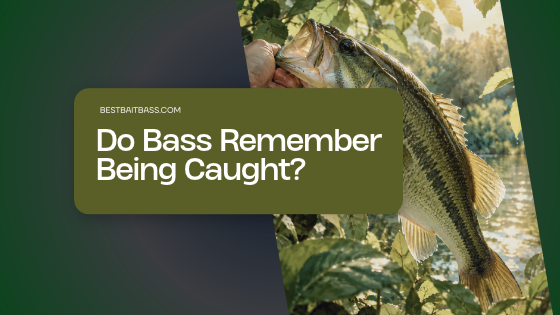
do bass remember being caught

How Fish Memory Works: Myths vs. Scientific Reality

To understand whether bass remember past encounters with anglers, we must first examine how fish memory works. For generations, people assumed fish operated purely on basic instinct with zero cognitive retention. When considering myths about fish memory: what does science say? Research proves conclusively that freshwater fish possess functional short-term and long-term memory capabilities.

Debunking the 3-Second Memory Myth

The idea that fish forget everything every three seconds is entirely false. Scientific experiments across various teleost species, including largemouth and smallmouth bass, demonstrate that fish can retain information for weeks, months, and even years. Studies show that fish can navigate complex mazes, remember spatial locations of food sources, and recognize specific predators long after their initial exposure.

Fish Brain Anatomy and Learning Capacity

While fish brain anatomy differs significantly from mammals, it is surprisingly sophisticated. Fish lack a mammalian cerebral cortex, but they possess a telencephalon and a well-developed cerebellum. The telencephalon handles associative learning and spatial memory, allowing bass to connect specific sensory cues—such as the vibration of a spinnerbait or the unnatural resistance of a fishing line—with negative experiences.

Do Bass Remember Being Caught and Learn to Avoid Lures?

The short answer is yes: evidence strongly suggests that largemouth bass can remember capture experiences and modify their behavior afterward. Extensive field experiments prove that long-term memory in largemouth bass plays a primary role in how they respond to fishing pressure over time.

Long-Term Memory in Largemouth Bass

In controlled fisheries experiments, researchers tagged individual largemouth bass and tracked their catch rates over extended periods. Several fisheries studies have shown that largemouth bass can become less susceptible to repeated capture on the same lure after catch-and-release events, suggesting a capacity for learning and lure avoidance. Researchers have documented lure avoidance behavior lasting from days to extended periods after capture.

Lure Conditioning and Pressured Waters

This phenomenon is known as lure conditioning. In heavily pressured public lakes, bass quickly learn to distinguish between natural prey and artificial lures. They accomplish this by associating lure traits—such as repetitive rattling sounds, unnatural metallic reflections, or stiff line movement—with the trauma of being hooked. This adaptive learning directly impacts catch-and-release fishing, making unpressured or natural-presentation techniques far more effective on smart, experienced fish.

Do Bass Feel Pain or Fear When Hooked?

One of the most intense debates in angling ethics centers around sensory perception: do bass feel pain or fear when hooked, and does the experience cause lasting psychological damage?

Pain Perception vs. Nociception in Bass Biology

To address whether fish feel pain, scientists distinguish between nociception (the physical detection of harmful stimuli) and the emotional experience of pain. Bass possess nociceptors—nerve endings that detect tissue damage, pressure, and temperature extremes. When hooked, a bass experiences physical stress and discomfort. However, because they lack the neocortex responsible for human conscious emotion, their reaction is primarily a physiological stress response rather than human-like emotional fear or psychological pain.

Stress in Caught Fish and Physiological Impacts

Even if bass do not feel conscious fear in the human sense, stress in caught fish is very real. Hooking, fighting, and air exposure trigger a surge of stress hormones like cortisol and lactate in the fish’s bloodstream. Elevated stress levels temporary impair swimming performance, immune response, and natural feeding habits. While catch-and-release fishing is generally non-lethal, improper handling can turn a temporary memory event into a fatal ordeal.

Practical Angler Tips: Minimizing Stress in Caught Fish

As responsible anglers, our goal is to enjoy sport fishing while ensuring the long-term health of the fishery. Understanding the impact of ‘catch-and-release’ experiences on fish behavior allows us to modify our techniques to keep fish healthy and minimize physiological trauma.

Handling Practice Impact on Bass Stress & Memory Best Technique / Tool
Fight Duration Extended fights increase physical exhaustion and lactic acid buildup, reducing recovery rates after release. Use appropriately heavy tackle to land bass quickly and minimize stress.
Air Exposure Prolonged time out of water reduces oxygen intake and can trigger significant physiological stress. Keep bass in the water whenever possible and limit photo sessions to a few seconds.
Hook Removal Deep-hooked fish may suffer internal injuries that affect survival and increase stress levels. Use barbless hooks or single inline hooks and carry long-nose pliers for quick hook removal.
Slime Coat Protection Handling with dry hands can damage the protective slime coat, increasing the risk of infection and disease. Always wet your hands before touching the fish and avoid placing it on dry surfaces.
Landing Nets Traditional nylon nets can damage fins and remove protective mucus. Use rubberized or silicone landing nets whenever possible.
Fish Support Improper lifting can strain the jaw and internal organs, especially in larger bass. Support the fish horizontally with both hands when taking photos.
Release Method Releasing a stressed bass too quickly may reduce its ability to recover and swim away safely. Hold the fish upright in the water until it regains strength and swims away on its own.

Bass Care Tip: Studies on catch-and-release bass fishing suggest that minimizing fight time, air exposure, and handling stress can improve a bass’s chances of recovery after release. Using proper handling techniques helps protect fish populations and supports sustainable bass fishing practices.

Best Practices for Catch-and-Release Fishing

  1. Land Fish Quickly: Avoid over-playing bass on light line. Prolonged fights exhaust energy reserves and dramatically increase post-release mortality.
  2. Wet Your Hands: Never touch a bass with dry hands, towels, or gloves, as this strips their protective slime coat, leaving them vulnerable to bacterial infections.
  3. Minimize Air Exposure: Treat the fish like a swimmer holding their breath. Keep air exposure under 30 seconds total.
  4. Use Quality Conservation Gear: Switch to rubberized nets and barbless hooks. If a bass is deep-hooked in the esophagus or gills, cut the line close to the eyelet rather than tearing out tissue.
  5. Support Large Fish Properly: Hold large bass vertically by the lower jaw, or support their belly horizontally with your second hand. Never bend a heavy bass’s jaw horizontally by the lip alone, as this can fracture their jaw bone.

Conclusion

Scientific evidence suggests that bass are far more capable of learning and adaptation than many anglers once believed. Research indicates that bass can remember capture experiences, develop lure avoidance behaviors, and adjust their feeding patterns in response to fishing pressure. Understanding these biological and behavioral mechanisms can help anglers refine their presentations and become more effective on heavily pressured waters.

Just as importantly, this knowledge reminds us that every catch-and-release encounter has an impact on the fish. By landing bass quickly, minimizing air exposure, using fish-friendly equipment, and handling fish responsibly, anglers can help ensure healthy bass populations and sustainable fisheries for future generations.

Frequently Asked Questions

Do bass remember being caught?

Research suggests that bass can learn from previous capture experiences and may become less likely to strike the same lure after being caught and released.

How long can a bass remember being caught?

Studies indicate that bass can retain learned associations for extended periods. The exact duration varies depending on environmental conditions and individual fish behavior.

Do bass learn to avoid specific lures?

Yes. This phenomenon is often referred to as lure conditioning. Bass exposed repeatedly to the same lures may become more cautious and less likely to strike them.

Can catch-and-release make bass harder to catch?

In heavily pressured waters, repeated catch-and-release encounters may influence bass behavior, causing some fish to become more selective and wary.

Do bass feel pain when hooked?

Bass possess nociceptors that detect harmful stimuli. While scientists continue to debate the nature of fish pain, bass clearly experience physical stress and injury when hooked.

Are bass intelligent fish?

Bass are capable of learning, recognizing patterns, adapting to fishing pressure, and remembering feeding locations, suggesting a higher level of behavioral adaptability than many anglers realize.

Why do bass stop biting after being caught?

After a stressful capture event, bass may temporarily reduce feeding activity and become more cautious toward similar lures or presentations.

What is lure conditioning in bass fishing?

Lure conditioning occurs when bass associate specific lure characteristics, such as sound, vibration, or appearance, with a previous negative experience and begin avoiding them.


Filed Under: Bass Fishing Questions Answered Tagged With: BASS FISHING, Catch and Release, Fish Behavior, Fishing Science, Lure Conditioning

Do Bass Sleep? What Science Reveals About Bass Resting Behavior

October 26, 2026 By best bait bass

Bass are among the most studied freshwater sport fish in North America, yet one question continues to spark debate among anglers: Do bass actually sleep?

The short answer is yes. However, bass do not sleep in the same way humans do. They do not close their eyes, lie down, or enter deep unconscious states. Instead, they experience periods of reduced activity and rest that help conserve energy while still allowing them to remain aware of predators and feeding opportunities. This sleep-like behavior has been observed across many fish species and is supported by modern scientific research.

do bass sleep

Do Bass Sleep?

Yes, largemouth bass and smallmouth bass enter periods of rest that fulfill the biological functions of sleep.

Scientists generally describe this behavior as a sleep-like state or quiescence, during which fish reduce movement, lower energy expenditure, and become less responsive to external stimuli while remaining capable of quickly returning to full activity when necessary.

Unlike humans, bass must remain partially alert because their environment constantly presents threats and opportunities. As a result, their version of sleep is lighter and more adaptive than mammalian sleep.

What Does Sleep Look Like in a Bass?

Many anglers expect sleeping fish to behave like sleeping mammals, but bass rest very differently.

A resting bass may:

  • Hover nearly motionless in the water.
  • Hold position beside cover.
  • Move only enough to maintain balance.
  • Show reduced reactions to nearby movement.
  • Conserve energy by lowering overall activity.

Because bass lack eyelids, they cannot close their eyes while resting. Their eyes remain open even during extended periods of inactivity.

To an angler using forward-facing sonar or underwater cameras, a resting bass often appears suspended in the same location for long periods, seemingly uninterested in nearby activity.

Do Bass Sleep at Night?

Nighttime is one of the most common periods for rest, but bass are not strictly nocturnal or diurnal.

Research suggests that fish activity is heavily influenced by circadian rhythms, which are biological cycles tied to light and darkness. Bass often reduce activity at night, but they can remain active when conditions favor feeding opportunities.

In many lakes, bass become highly active during:

  • Dawn
  • Dusk
  • Moonlit nights
  • Cooler summer evenings

This means bass may alternate between resting and feeding throughout the night rather than sleeping continuously.

Where Do Bass Sleep?

When resting, bass typically seek locations that provide protection and require minimal energy to maintain position.

Common resting areas include:

Aquatic Vegetation

Weed beds and grass lines provide security, shade, and protection from larger predators.

Fallen Timber

Submerged logs and brush piles offer excellent cover while reducing exposure.

Boat Docks

Dock pilings and floating structures create shade and relatively stable conditions.

Deep Water

During hot summer months, bass often rest in cooler, deeper water during the day.

Rock Structures

Points, ledges, and rock piles can serve as resting locations, especially when current or wind conditions are favorable.

Field observations indicate that resting bass frequently position themselves around these structures while displaying minimal movement.

Can You Catch a Sleeping Bass?

Absolutely.

One of the biggest misconceptions in bass fishing is that resting fish cannot be caught.

A bass may not be actively feeding, but it can still strike because of:

  • Territorial instincts
  • Reflex reactions
  • Curiosity
  • Aggression during spawning periods

This is why reaction baits such as crankbaits, jerkbaits, spinnerbaits, and topwater lures often trigger strikes from fish that do not appear to be feeding.

Many anglers unknowingly catch resting bass every season.

How Water Temperature Affects Bass Sleep

Water temperature is one of the most important factors influencing bass activity levels.

Winter

Cold water slows metabolism significantly.

Bass feed less frequently and spend longer periods conserving energy.

Spring

As temperatures rise, bass become increasingly active while preparing for spawning.

Summer

Very warm water often causes bass to rest during the hottest parts of the day and feed during low-light periods.

Fall

Bass typically become more active and aggressive as they prepare for winter.

Researchers note that fish sleep-like states and activity cycles are strongly influenced by environmental conditions, including light cycles and temperature.

Do Trophy Bass Sleep Differently?

Large bass are known for being remarkably energy efficient.

Older fish have survived years of fishing pressure and predation by minimizing unnecessary movement and feeding only when conditions are favorable.

As a result, trophy bass often:

  • Spend more time resting.
  • Feed during shorter windows.
  • Remain close to secure cover.
  • Move less frequently than younger fish.

This behavior is one reason giant bass can be so difficult to consistently catch.

Bass Sleep Myths

Myth #1: Bass Never Sleep

False.

Scientific evidence supports the existence of sleep-like states in fish characterized by reduced activity and responsiveness.

Myth #2: Bass Sleep Only at Night

False.

Bass may rest during both day and night depending on environmental conditions.

Myth #3: Sleeping Bass Can’t Be Caught

False.

A resting fish can still react aggressively to a lure entering its strike zone.

Myth #4: Bass Close Their Eyes When Sleeping

False.

Bass have no eyelids and rest with their eyes open.

What Does Science Say About Bass Sleep?

Recent scientific reviews have strengthened our understanding of sleep-like behavior in fish.

According to a review published in Chronobiology International, fish exhibit sleep-like states characterized by decreased motor activity, increased response thresholds, and regulation by circadian rhythms. The review also notes that sleep deprivation negatively affects fish behavior and cognitive performance.

A separate review published in the Journal of Experimental Biology concluded that behavioral sleep has been observed across fish species studied to date and that fish consistently display the accepted scientific criteria used to identify sleep.

Scientists generally evaluate fish sleep using several key indicators:

  • Reduced movement
  • Predictable resting periods
  • Increased difficulty in arousing the animal
  • Rapid recovery when disturbed

Bass demonstrate all of these behaviors during their resting periods.

Why Bass Don’t Sleep Like Humans

The main reason bass sleep appears unusual is because fish physiology differs substantially from mammalian physiology.

Unlike humans:

  • Bass have no eyelids.
  • Bass do not enter REM sleep as mammals do.
  • Bass remain partially aware of their surroundings.
  • Bass must continue basic physiological functions while resting.

Researchers often describe their resting behavior as quiescence rather than traditional sleep.

Still, the biological purpose remains similar: restoration, energy conservation, and maintenance of healthy brain and body functions.

Frequently Asked Questions

Do bass sleep with their eyes open?

Yes. Bass do not have eyelids, so they rest with their eyes open.

How long do bass sleep?

Scientists have not established a universal sleep duration for bass. Resting periods vary depending on environmental conditions such as temperature, season, food availability, and light cycles.

Are bass active at night?

Yes. Bass can be highly active after dark, especially during warm months and under favorable feeding conditions.

Can bass be caught while resting?

Yes. Resting bass frequently strike lures due to instinctive or territorial reactions.

Do largemouth and smallmouth bass sleep?

Yes. Both species display periods of reduced activity and rest, although exact behavioral patterns may vary depending on habitat and environmental conditions.

Final Thoughts

So, do bass sleep?

The evidence strongly suggests they do, although not in the same way humans sleep. Bass enter sleep-like states that allow them to conserve energy, recover from activity, and maintain healthy biological functions while remaining alert enough to respond to threats and feeding opportunities. Scientific research on fish sleep continues to expand, but current evidence supports what many observant anglers have long suspected: bass spend part of each day resting, even if they never close their eyes.

References

Topal, A. (2026). Sleep, Circadian Rhythms, and Brain Function in Fish. Chronobiology International.

Norman, H., Munson, A., Cortese, D., Koeck, B., & Killen, S.S. (2024). The Interplay Between Sleep and Ecophysiology, Behaviour and Responses to Environmental Change in Fish. Journal of Experimental Biology.

Do Fishes Sleep? The Science of How Fish Rest. Biology Insights.

Do Fish Go to Sleep? The Science of How Fish Actually Rest. Biology Insights.

Do Fish Sleep? Fish Rest and Activity Cycles. Dr. Zubair Khalid.

Filed Under: Bass Fishing Questions Answered Tagged With: Bass Activity, Bass Behavior, Bass Facts, Bass Fishing Questions, Bass Habitat, Bass Science, Bass Sleep, Fish Behavior, Largemouth Bass, Smallmouth Bass

Primary Sidebar

Product categories

  • Fishing Gifts
  • Bass Fishing Gear
    • Fishing Line
    • Complete Fishing Set
    • Fishing Reels
    • Lures
    • Fishing Storage Rack
    • Fishing Line Spooler
    • Fishing Rods
    • Fishing Rod and Reel Combos
    • Fishing Tackle Boxes and Bags

Recent Posts

  • Why Do Bass Jump? The Science Behind Bass Leaping Behavior
  • Can Bass See Fishing Line? The Ultimate Guide to Line Visibility
  • Do Bass Remember Being Caught? What Science Reveals About Bass Memory
  • Can Bass See in the Dark? Night Fishing Vision & Science Explained
  • Do Bass Sleep? What Science Reveals About Bass Resting Behavior

Affiliate Disclaimer

BestBaitBass.com is a participant in the Amazon Services LLC Associates Program, an affiliate advertising program designed to provide a means for sites to earn advertising fees by advertising and linking to (“Best Bait Bass” (amazon.com, or endless.com, MYHABIT.com, SmallParts.com, or AmazonWireless.com).

Footer

Categories

  • Bass Fishing (21)
  • Bass Fishing Questions Answered (5)
  • Best bass lures (12)
  • Best Bass Lures By Season (4)
  • Best Reels (2)
  • Crankbait (2)
  • Fishing Gear (2)
  • Fishing Techniques (2)
  • Jerkbaits (1)
  • Jigs (1)
  • Spinnerbaits (2)
  • Swimbaits (2)
  • Topwater lures (2)
  • Worms (1)
Why Do Bass Jump

Why Do Bass Jump? The Science Behind Bass Leaping Behavior

can bass see fishing line

Can Bass See Fishing Line? The Ultimate Guide to Line Visibility

do bass remember being caught

Do Bass Remember Being Caught? What Science Reveals About Bass Memory

can bass see in the dark

Can Bass See in the Dark? Night Fishing Vision & Science Explained

Products

  • LHKNL Flashlight Ultra-Light Rechargeable LED Headlamp Wave your hand, light your catch - LHKNL Headlamp Flashlight perfect fishing gift!
  • yongzhi carbon fiber material metal telescopic fishing rod and reel YONGZHI Carbon Fiber Material Metal Telescopic Fishing Rod and Reel
  • ‎Stainless Steel, Carbon Fiber ‎Spinning Fishing Combo ‎Ghosthorn ‎Stainless Steel, Carbon Fiber ‎Full Fishing Kit with Carrirer Case
  • Graphite Spinning Fishing Reel Graphite Spinning Fishing Reel: Pflueger President Review
  • Plano Guide Series Fishing Tackle Storage Bag with Magnetic Dropzone included 5 Stows Plano Guide Series Fishing Tackle Storage Bag

Tags

BASS BASS BAIT BASS BAITS Bass Behavior Bass Facts BASS FISHING BASS FISHING BAITS BASS FISHING LURES bass jigs BASS LURE BASS LURES Bass Science BEST BAIT FOR BASS FISHING BEST BAITS FOR BASS BEST BAITS FOR BASS FISHING BEST BASS FISHING BAIT BEST BASS FISHING LURE BEST LURE FOR BASS BEST LURES FOR BASS BEST LURES FOR BASS FISHING Catch and Release cold water fishing Cold Water Tactics Creek Fishing deep water bass Finesse Fishing Fish Behavior fishing gear fishing reels Fishing Techniques fishing tips Kayak Fishing Largemouth Bass Lure Techniques Ned Rig pressured bass Smallmouth Bass Soft Plastics SPINNERBAIT Swimbaits TEXAS RIG Topwater lures vertical jigging Walking Baits winter bass fishing

© 2026 Best Bass Fishing Lures
 · Powered by BestBaitBass.com