• Skip to primary navigation
  • Skip to main content
  • Skip to primary sidebar
  • Skip to footer
  • Crankbait
  • Spinnerbaits
  • Jigs
  • Swimbaits
  • Topwater lures
  • Jerkbaits
  • Worms

Best Bait For Bass

Best Bass Baits, Lures - Best Spinning Reels - Best Rods and Best Lines for Bass. Everything for Bass Fishing


  • Home
  • Bass Baits and Lures
  • Shop

Best bass lures

The Finesse Revolution: How to Catch Pressured Bass with Micro Ned Rigs

September 30, 2026 By best bait bass

When the sun is high, the water is crystal clear, and the fishing pressure is at an all-time high, the trophy bass in your favorite lake seem to develop a graduate-level education in avoiding traditional lures. While standard crankbaits and bulky jigs might trigger aggressive strikes in the spring, pressured bass often require a more subtle approach. Enter the micro ned rig—a game-changing technique that has become the secret weapon for tournament pros and weekend warriors alike. By downscaling your profile, you tap into the innate curiosity and predatory instincts of fish that have ignored everything else in your tackle box.
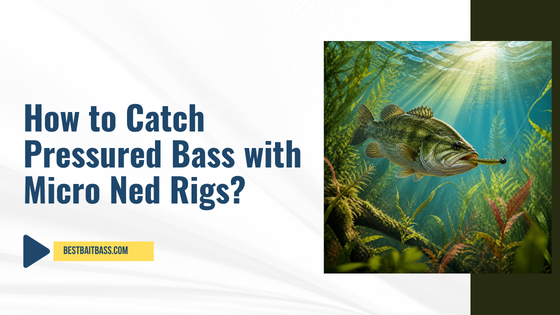
micro ned rig

Understanding the Micro Ned Rig Phenomenon

The micro ned rig is essentially a miniature version of the classic Ned rig, typically utilizing baits under 2.5 inches paired with jig heads weighing between 1/32 and 1/16 ounce. The magic lies in the buoyant plastic and the slow, agonizing descent of the bait. Because these baits are so small, they mimic tiny baitfish, crawfish, or aquatic insects that larger bass often consume with zero hesitation.

Why Size Matters in High-Pressure Scenarios

In heavily fished waters, bass become conditioned to the “thump” and vibration of traditional moving baits. A micro ned rig provides a minimalist silhouette that doesn’t trigger the caution sensors of a veteran largemouth or smallmouth. It is the ultimate finesse tool for when conditions are tough.

Essential Gear for Micro Finesse Success

To effectively fish a micro ned rig, you cannot use your standard heavy-action flipping stick. You need specialized gear that allows for casting ultra-light weights while maintaining the sensitivity required to detect the slightest ‘tick’ on the line.

Rod and Reel Specifications

For these tiny weights, a light or ultra-light power spinning rod with a fast action is essential. Pair this with a 1000 or 2000 series spinning reel spooled with 6-pound test fluorocarbon line or a 10-pound braid to 6-pound fluorocarbon leader. The lack of stretch in these lines is vital for setting the hook at the end of a long cast.
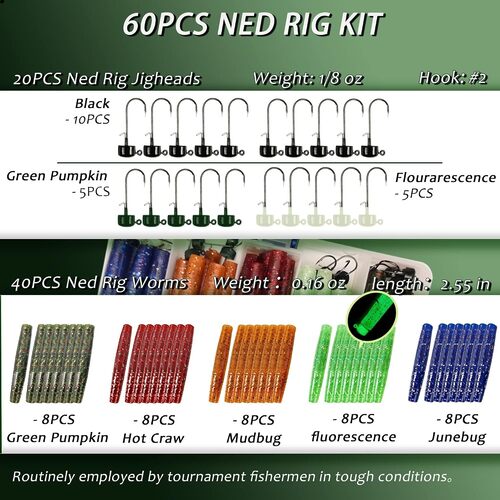
Micro Ned Rigs Kit

Check Price

Tactical Approaches for Pressured Waters

When you are fishing a pressured fishery, location and patience are your best friends. These fish are often found holding tight to structural elements or suspended in deep grass lines where they feel protected from the onslaught of topwater and spinnerbait anglers.

Identifying Key Zones

Focus on transition zones, such as where hard bottom meets soft silt, or the outer edges of weed beds. A micro ned rig excels when worked slowly along these boundaries, as it mimics natural forage that isn’t moving fast enough to be a threat, but is certainly worth an easy meal.

Comparison: Traditional vs. Micro Ned Rigs

Feature Traditional Ned Rig Micro Ned Rig Recommended Use
Bait Size 3.0″ – 4.0″ 1.5″ – 2.5″ High pressure / cold water
Jig Weight 1/8 oz – 1/4 oz 1/32 oz – 1/16 oz Finesse / ultra-clear water
Best Action Glide / Bounce Twitch / Dead-stick Finicky suspended fish
Line Weight 8 lb – 10 lb 4 lb – 6 lb Maximum stealth

Mastering the Retrieval and Presentation

The most common mistake anglers make with the micro ned rig is working it too fast. The bait is designed to stand up on the bottom or quiver in place. The ‘do-nothing’ retrieve is often the most lethal; simply cast it out, let it hit the bottom, and let it sit. If you don’t get a bite in ten seconds, give the rod tip a slight twitch to stir up some silt, then let it sit again.

The Importance of the ‘Dead-Stick’ Technique

Many anglers underestimate the power of letting the bait sit completely still. A micro ned rig’s buoyant material causes the tail to vibrate with even the smallest ripple in the water, mimicking a dying crustacean. This subtle action is often enough to entice a follow-up bite from a bass that has been stalking your bait.

Conclusion

The micro ned rig is more than just a lure; it is a philosophy of patience and precision. By embracing the finesse revolution, you can unlock the potential of your local waters and consistently put more fish in the boat, even on the toughest days. Start by downscaling your gear, focus on the bottom composition, and don’t be afraid to let your bait soak in the strike zone. Once you see how effectively this technique triggers bites from pressured bass, it will quickly become the most important tool in your arsenal.
Filed Under: Bass Fishing, Best bass lures Tagged With: BASS FISHING, BASS LURES, Finesse Fishing, fishing tips, Ned Rig

Scent, Dye, and Slice: 5 DIY Soft Plastic Modifications for Highly Pressured Bass

August 11, 2026 By best bait bass

Imagine pulling up to your favorite public lake on a sunny Saturday afternoon. There are a dozen trailers already parked at the ramp, and every prime laydown and weed edge has likely had three different spinnerbaits, jigs, or Texas rigs run through it. In these highly pressured environments, standard bass lures pulled straight out of the retail package often get nothing more than a passing glance from educated fish. Bass learn incredibly fast; they quickly associate the repetitive thump of a standard paddle tail or the identical profile of a mass-produced worm with danger.

To trigger strikes from these highly conditioned lunkers, you must show them something they have never seen before. That is where mastering custom DIY soft plastic modifications comes into play. By altering the action, visual profile, and scent dispersion of your lures, you can convert stubborn followers into aggressive strikers. Let us dive into the art and science of modifying bass baits to help you dominate heavily pressured waters and put more fish in your boat.

soft plastic modifications

Why Pressured Bass Demand Custom Modifying Bass Baits

The Conditioning of Largemouth and Smallmouth

Bass are not cognitive masterminds, but they possess incredibly sensitive, highly evolved sensory systems designed for survival. When a quality four-pound largemouth gets caught, weighed, and released multiple times on the exact same green pumpkin stick bait, its lateral line and visual cortex catalog that specific vibration and silhouette as a threat. Over time, standard factory presentations act more like warning signs than food sources on heavily fished bodies of water.

Breaking the Visual Cliché

Standard out-of-the-box lures feature factory-perfect symmetry and completely predictable actions. While this consistency is great for manufacturing, it creates a visual cliché underwater. By introducing subtle imperfections—such as a split tail, an asymmetric paddle, a customized color bleed, or an unusual scent trail—you break this visual expectation. This triggers a predatory reaction based on curiosity or aggression rather than a flight response.

The 5 Essential Soft Plastic Modifications for Pressured Bass

1. The Slice and Splice (Creating Unique Action)

One of the most effective soft plastic modifications you can perform in your boat or at your workbench is physically altering the design of your plastics with a razor blade. By slicing a craw claw down the middle, you double its fluttering action on the fall. Similarly, making a vertical slice down the tail of a standard soft-plastic fluke turns a stiff darting bait into a highly active split-tail minnow that shimmers on the pause. If you want to get creative, use a lighter or a soldering iron to fuse different baits together—such as welding a beaver tail onto a finesse worm body to create a completely custom hybrid bait.

2. How to Dye Soft Plastics Bass Love (Adding Contrast and Hotspots)

Color plays a critical role in high-pressure scenarios, especially in varying water clarities. Knowing how to dye soft plastics bass find irresistible can give you a massive competitive edge on the water. Utilizing specialized scent-infused dyes like Spike-It allows you to add bright chartreuse, orange, or red highlights to claw tips, worm tails, or paddle tails. The key here is extreme subtlety: a dipped tail tip mimics the natural orange defensive posture of a crawfish or the bright fins of an injured bluegill. Avoid dipping the entire bait; instead, focus on creating localized visual hotspots that focus the bass’s attention.

3. Scent-Locking: Infusions and Chambering

While many modern plastics come pre-scented from the factory, that scent dissipates quickly after a few dozen casts. Pressured bass will hold onto a modified bait much longer if it features an enhanced, slow-releasing scent profile. You can modify your soft plastics by inserting scent sticks or hollow glass rattle tubes filled with crawfish or shad-scented gel directly into the body. This slow-release method creates a highly convincing scent trail that leads the bass directly to your hook, increasing your hookup ratio on tough days.

4. Weighting Tricks: Insert Weights and Nail Sinker Tuning

Do not limit yourself to standard Texas or wacky rigging. By strategically inserting tiny tungsten nail sinkers into different parts of your soft plastic bait, you completely change its center of gravity, fall rate, and action. Inserting a small nail weight into the tail of a wacky-rigged stick bait creates a unique backward-gliding action when fished weightless. This allows your bait to slide directly under docks, overhanging trees, and deep into brush piles where cautious bass hide from fishing pressure.

5. Tail Profiling: Segmenting and Shaving for Micro-Vibrations

Sometimes, less is more when dealing with highly finicky bass. For micro-vibrations in cold or heavily fished waters, use a sharp razor blade to shave down the tail section of a fluke, worm, or swim jig trailer. Shaving the plastic makes it incredibly pliable and responsive to even the slightest rod twitch or underwater current. Additionally, pinching or cutting small notches along the body of a straight-tail worm increases its flexibility, causing it to quiver enticingly when resting completely still on the bottom.

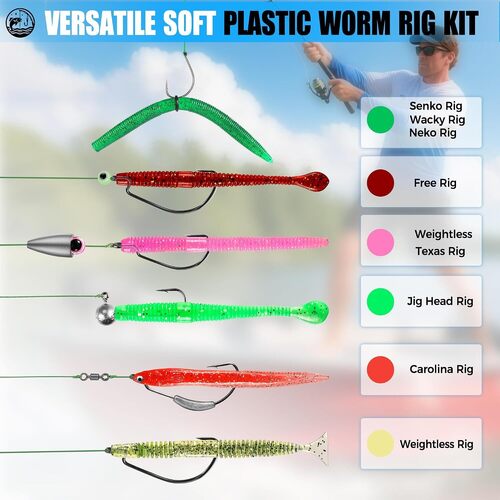
Soft Plastic Fishing Lures with Accessories

Check Price

Comparative Guide of Soft Plastic Modification Techniques

To help you decide which modification is best suited for your current fishing conditions, consult the comparative table below:

Modification Type Target Scenario Key Benefit Difficulty Primary Tool Needed
Tail Slicing Warm water, active baitfish bite Increased flutter and water displacement 1 Utility Razor Blade
Tail Dipping (Dyeing) Muddy water, bluegill spawn High visual contrast, mimic natural highlights 2 Garlic or Gamefish Dye
Nail Sinker Insert Suspended bass under docks Backward gliding action, reaches hidden fish 2 Tungsten Nail Weight
Hybrid Welding Post-frontal, lockjaw bass Completely unique silhouette and action 4 Lighter / Soldering Iron
Tail Shaving Cold water, extreme finesse Maximum flexibility, micro-vibrations 3 Single-Edge Razor

Best Practices and Pitfalls When Modifying Bass Baits

Over-Modifying and Ruining Lure Balance

While modifying bass baits is an excellent way to get more bites, it is easy to overdo it. Slicing too deeply or adding too much dye can ruin the hydrodynamic balance of your plastic. If you shave too much material off a paddle tail, it may lose its kicking action entirely. Always test your modified baits in a livewell or shallow water next to your boat before casting them out to ensure they retain an appealing, lifelike presentation.

Scent and Dye Storage Precautions

Modified plastics—especially those that have been dyed or heavily scented—must be stored with care. Never put dyed plastics back into bags with unmodified baits, as the colors will bleed, ruining your entire inventory. Store your customized creations in separate compartment utility boxes, and always ensure your dye bottles are tightly sealed, as accidental spills can permanently stain your boat carpet or hands.

Conclusion

When the fishing pressure is high and the bite gets tough, sticking to standard out-of-the-box baits is a recipe for a tough day on the water. By taking matters into your own hands and applying these five DIY soft plastic modifications, you can present highly conditioned bass with a look, action, and scent they simply cannot resist. Whether you are learning how to dye soft plastics bass love or slicing tails for enhanced micro-vibrations, these minor tweaks make a major difference. Grab your tackle box, a sharp razor, and a bottle of dye, and start experimenting on your next outing to unlock the true potential of your soft plastic arsenal.

Filed Under: Best bass lures Tagged With: BASS FISHING, DIY fishing lures, fishing tips, pressured bass, Soft Plastics

The Ned Rig Guide: Why Less is More for Finesse Bass Fishing

July 27, 2026 By best bait bass

There is an old adage in angling that to catch bigger fish, you need to use bigger lures. While that might hold true when you are hunting trophy-class predators on active feeding cycles, there comes a time on every body of water when the traditional playbook fails. Cold fronts roll in, recreational boat traffic peaks, or recreational pressure turns otherwise aggressive largemouth and smallmouth bass into tight-lipped, highly suspicious spectators. This is where finesse bass fishing saves the day, and no tactic in the modern era has revolutionized this category quite like the Ned rig.

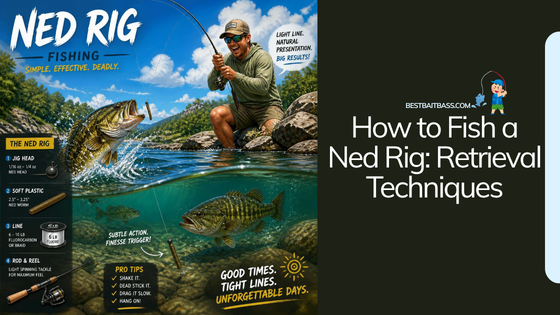
ned rig fishing

At first glance, the Ned rig looks almost laughable. It consists of a small, blunt-cut chunk of soft plastic matched with a light, open-hook jig head. It does not possess flashy spinner blades, loud internal rattles, or a hyperactive paddle tail. Yet, despite its unassuming profile, ned rig fishing has become an indispensable technique for professional tournament anglers and weekend warriors alike. The secret lies in its minimalism. By presenting an easy, highly realistic, and vulnerable meal, this rig coaxes bites from bass that would otherwise ignore every other presentation in your tackle box.

Understanding the Ned Rig Phenomenon

To truly master the Ned rig, you must first understand the philosophy behind it. Pioneered by legendary outdoor writer Ned Kehde, this style of fishing—originally referred to as “Midwest Finesse”—was designed to catch high numbers of bass in heavily pressured public reservoirs. The core concept is simple: present a small, slow-moving bait that mimics natural forage like crawfish, insects, or dying minnows.

The Origins of Midwest Finesse

Ned Kehde developed this system using customized tackle, often cutting larger soft plastics in half to create smaller profiles. He realized that bass in highly pressured lakes quickly learn to avoid large, fast-moving artificial lures. By scaling down the presentation and fishing it on incredibly light line, Kehde found he could trigger consistent bites even on the toughest days of the year.

Why Bass Can’t Resist the “Do-Nothing” Action

Unlike active swimbaits, the Ned rig relies heavily on a “do-nothing” subtle appeal. When the rig rests on the bottom, the buoyant soft plastic stands straight up, shaking slightly with the natural movement of the water current. To a bass, this upright posture perfectly replicates a defensive crawfish or a small baitfish feeding on the bottom. The lack of aggressive movement is precisely what makes it so non-threatening and irresistible.

Essential Gear for Ned Rig Fishing

While the Ned rig is incredibly simple, using the correct tackle is non-negotiable. Because you are throwing exceptionally light baits, a heavy baitcasting setup will only result in frustration and nested lines. Succeeding with this technique requires a dedicated spinning tackle setup designed for maximum sensitivity.

The Perfect Rod and Reel Setup

A medium-light power spinning rod with a fast action tip is the gold standard for ned rig fishing. The soft tip allows you to cast lightweight jig heads accurate distances, while the medium-light backbone provides enough power to drive the thin-wire hook home and steer bass away from structure. Pair this rod with a high-quality 2500 or 3000-sized spinning reel featuring a smooth drag system to handle sudden, powerful runs.

Line Selection: Fluorocarbon vs. Braided Main Line

Most elite anglers prefer spooling their spinning reels with a main line of 8 to 15-pound test braided line, tied to a long leader of 6 to 8-pound test fluorocarbon. The braided main line offers zero stretch and exceptional sensitivity, allowing you to feel every pebble, transition, and subtle bite. The fluorocarbon leader provides the stealth needed in ultra-clear water, ensuring suspicious bass do not spot your line.

Selecting the Best Ned Rig Baits and Jigs

Not all soft plastics and jig heads are created equal. To maximize your success, you must pair the right hook with the best ned rig baits. The market is filled with options, but understanding material properties is key.

Soft Plastic Profiles and Materials

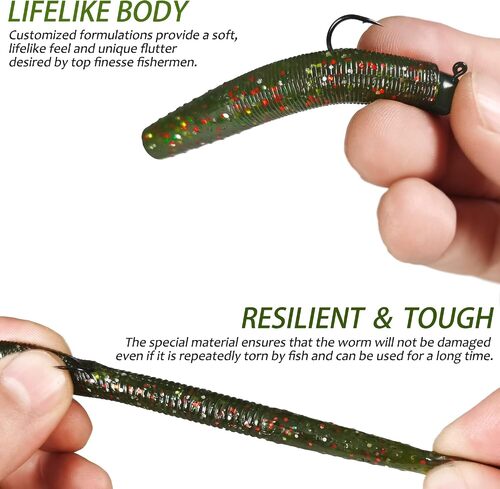
The most critical advancement in Ned rig fishing was the introduction of hyper-buoyant, tear-resistant materials like ElaZtech. Traditional plastisol baits sink flat to the bottom, whereas ElaZtech baits naturally float. This buoyancy is crucial because it keeps the tail of your bait pointing upward at rest. Popular profiles include straight stick worms, ribbed craw profiles, and miniature creature baits.

Jig Head Shapes and Weedless Options

The classic Ned rig jig head features a mushroom-shaped head. This design is engineered to keep the bait standing upright when it contacts the bottom. For fishing around heavy vegetation, brush, or timber, look for jig heads equipped with light wire weedguards. These guards prevent snagging while remaining soft enough to easily collapse when a bass strikes, ensuring a solid hookset.

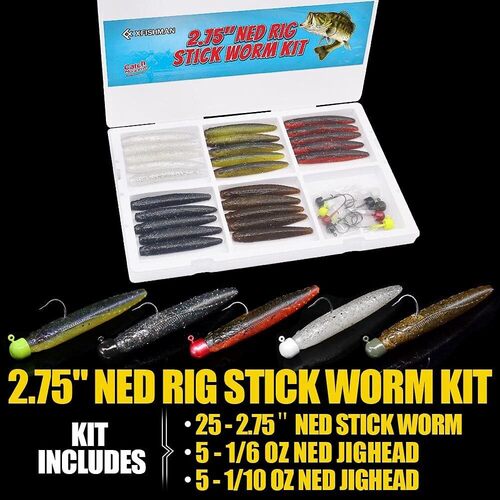
Ned Rig Kit

Check Price

How to Fish a Ned Rig: Master the Retrieval Techniques

Knowing how to fish a ned rig boils down to patience and reading the water. Unlike fast-moving search baits, you must slow down your presentation to let the lure do the work for you. There are three primary retrieval methods that consistently put bass in the boat.

The Classic Drag and Shake

Cast your rig out and allow it to sink to the bottom on a completely slack line. Once it makes contact, slowly drag the bait along the bottom by sweeping your rod tip to the side. As you drag, gently shake your rod tip to transmit subtle vibrations down to the bait. Stop, wind up the slack, and repeat. Many bites occur during the pause immediately following a drag.

The Swim and Glide

This technique is highly effective when bass are suspended off the bottom or feeding on baitfish. After casting, begin a slow, steady reel turn while keeping your rod tip raised. Allow the bait to glide through the middle of the water column, occasionally stopping your retrieve to let the rig slowly spiral back down toward the bottom.

The Hop and Fall

If you are fishing over rocky bottoms or submerged structures, hopping the rig can trigger aggressive reaction strikes. Snap your rod tip upward to lift the jig head a foot or two off the bottom, then let it fall back down on a semi-slack line. Watch your line closely as the bait falls, as bass will often grab it on the descent.

60 pcs ned rig soft worms kit

Check Price

Comparing Finesse Tactics

To help you decide when to tie on a Ned rig versus other popular finesse bass fishing options, refer to the comparative table below:

Technique Ideal Depth Best Structure/Cover Action Level Target Bass Activity
Ned Rig 1 – 20 feet Gravel, Rocks, Clay Low / Subtle Highly Lethargic to Neutral
Drop Shot 10 – 50 feet Deep Ledges, Humps Medium / Shaking Suspended or Bottom-Hugging
Wacky Rig 1 – 10 feet Docks, Overhanging Trees Medium / Fluttering Shallow & Actively Cruising
Shaky Head 5 – 25 feet Brush Piles, Rock Piles Medium / Constant Shake Foraging on Bottom

Seasonal Strategies for Ned Rig Success

The beauty of this system is its year-round efficacy. No matter the season, a variation of this downsized presentation will produce bites.

Spring Cold Fronts

During the spring, pre-spawn bass are prone to moving shallow only to be pushed deep again by sudden cold fronts. When these atmospheric changes occur, the fish become incredibly lethargic. Pitching a Ned rig to the first break line outside of spawning flats is an incredibly effective way to salvage a tough spring day.

Summer Lull and Deep Structure

As water temperatures soar, bass migrate to deeper structures like main-lake points, humps, and ledge systems. While deep diving crankbaits and heavy jigs work when fish are active, they can quickly scare off school residents. Dragging a light Ned rig through these deep offshore areas will trigger consistent bites from pressured summer schools.

Fall Transitions and Winter Lethargy

In autumn, bass follow baitfish into shallow creeks. Matching your Ned rig bait color to the local forage can prove deadly. When winter arrives and water temperatures plummet, a bass’s metabolism slows down to a crawl. The slow, delicate presentation of a Ned rig allows you to fish slow enough to match their sluggish winter pace.

Conclusion: Embracing the Finesse Revolution

In a sport often dominated by high-speed boats, heavy tackle, and loud lures, the Ned rig stands as a testament to the power of subtlety. By choosing to downsize your gear and slow down your approach, you unlock a highly consistent method for catching bass under the most challenging conditions. Keep your tackle light, choose high-quality buoyant baits, and never underestimate the power of doing absolutely nothing on the water. Tie on a Ned rig during your next outing, and experience firsthand why less is truly more in the world of bass fishing.

Filed Under: Bass Fishing, Best bass lures Tagged With: BASS LURES, Finesse Fishing, Fishing Techniques, Ned Rig, Soft Plastics

Topwater Family of Bass Lures Buying Guide

July 7, 2019 By best bait bass

Ever tried surface water fishing? You do not know what an experience you are missing. Topwater lures are real thrillers as they lie seemingly harmless but once they are attacked from underneath they give the excitement that every angler wants. You have a variety to choose from in terms of shapes, designs and other preferences that you want in your bass baits.

Topwater Baits

Topwater lures, or surface baits, are just what the names suggest, fishing lures that float on the surface of the water. Most topwaters have a cupped head or lips attached to make a splashing or popping sound when fished. The noises that are created attract fish from great distances.

Generally you cast topwater lures near cover. A common technique is to retrieve the lures in quick jerks with short pauses in between. You will get the most luck with topwaters in shallow water in the morning and evening.

Topwater Lures For Bass

Here are the rich varieties of topwater lures that you can choose for your bass fishing adventure:

  • Buzzbaits: they are close to spinnerbaits but these ones are for surface fishing. They are best in grass and submerging weeds. For the abundant catch use them at the middle of spring to mid-fall seasons when the water temperature is as high as 65 degrees.
  • Poppers: their popping and grudging sound is what draws bass to them. They should not be left to lie on the water for long since they lose their clarity. You have to regularly pop them in and out of the water in frequent successions.
  • Jerkbaits: their versatility in different fishing conditions has kept them a top priority among many bass fishermen. Jerkbaits will be at their top performance both in clear and dingy water.
  • Stickbaits: they are popularly referred to as “walking baits” since they do not have their own action. It will take the skills of a fisherman to make them perform manoeuvres to lure bass into biting them.

topwater lures for bass

Topwater Lures Reviews

Many bass tournaments have been won with topwater fishing lures in shallow water! In this entry we want to discuss a couple of the most popular surface baits that even the pros won’t leave behind.

Arbogast Jointed Jitterbug

The Fred Arbogast Jointed Jitterbug has been often called “most action-packed topwater lure available”. The Arbogast company produces some of the best baits available to professional and amateur anglers and the Jitterbug is no exception. The splash on the surface of the water created by the jointed tail will attract large fish from afar and not just bass either. Musky and pike have been caught on this lure just as often I’m sure.

Arbogast Jitterbug

Are you looking for a lure that is easy to fish with but still keeps a lot of top water action? The Arbogast Jitterbug is probably your answer. To be honest, there is really only one way I would recommend fishing this lure, and that’s to use it how it is designed. The small plate in the front was designed to cause the lure to shimmy back and forth by itself. Therefore, instead of having to use a slack retrieval method like walking the dog, you can just let the Jitterbug do a smaller side to side motion for you by a steady and medium speed retrieval.

Can The Arbogast Jitterbug Be Used For Night Fishing?

The noise on a Jitterbug is also very unique. Since you are doing a consistent retrieval and there is a consistent noise, many fishermen enjoy using this for any type of night bass fishing. What you will hear is a consistent popping noise that is produced by the way it disperses the water in front of the lure. It also has to do with the way the lures plate on the front slaps against the lure as it goes through the water which gives it another different type of noise which fish seem to be attracted to.

Does This Topwater Lure Come In Different Models?

There are actually three different models. Your first would be the standard Jitterbug which comes with a treble hook on the back and is the classic Jitterbug that many fishermen have been using for years. I think Arbogast got in on a good market when they produced the Weedless Jitterbug. Now, obviously, there is still some risk of getting the lure snagged, but the smaller hook protected by the body of the lure and with it being skirted it will significantly help reduce the amount of times you will be snagged on logs and other brush. The last option you have is the Jointed Jitterbug. This actually has a wagging tail to produce a bigger motion in the water than the classic Jitterbug.

Fred Arbogast Jointed Jitterbug Review

The special lip on the Jitterbug creates a tremendous splashing sound on the surface of the water that bass can hear from great distances. Add to that the action of the tail of the Jointed Jitterbug and start attracting even bigger gamefish looking for their next meal. It has been said that the Jointed Jitterbug is the “most action-packed topwater lure available”. I don’t know about that because there are plenty of action packed topwaters, but it has proven to be quite successful for pulling in some big bass and pike.

The treble hooks hanging from the lure are bright plated and the action from the jointed tail sends out some extra flash to the fish below. When fished slowly, the Jointed Jitterbug makes a sort of plop-plop sound. Reel it a bit faster and the plopping sound becomes a bit more frantic mimicking wounded prey having a heckuva struggle and needs to be put out of it’s misery.

Arbogast Topwater Jointed Jitterbug 2.0 Bass Fishing Lure

Arbogast Jointed Jitterbug 2.0 Bass Lure

Buy Now

The Jitterbug, whether it be the straight bodied Jitterbug or the Jointed, offers awesome action when fished in the shallows at night. With the jointed tail, I tell you, the bass can’t resist the side to side action. My favorite time to fish this lure is in the warmer summer months during a full moon. The Jitterbug howls to these big predators and they can’t ignore. For even deadlier action try the Jitterbug Clicker.

One downfall that I’ve found with the Jointed variety of the Jitterbug is that the tiny screws come loose after catching several big fish, which in general doesn’t take too long with this lure. Just keep a tool handy and keep an eye on the screws and tighten it up when necessary. It’s worth the little bit of work and the extra attention, believe me.

I’ve pulled up everything from big bluegill, to 5,6,7 pound bass, to northerns and musky on this lure. I’m not kidding when I say the big fish will be tugging at this lure, so be sure to add some heavy abrasion resistant line to your spool, you don’t want them wrapping you around something that can cause your line to break.

Heddon Crazy Crawler

The Heddon Crazy Crawler is another oft-used lure by professional anglers. The Heddon name attached to the lure should tell you something right off the bat. Heddon is been around a long time and boasts some of the top used lures to date.

The Crazy Crawler is a great lure to use for even beginner topwater anglers. No special technique is required, it has crazy action without any extra effort on your part. You can just cast and retrieve. Try going slow and then speed up if you don’t see strikes. After the cast, wait until the rings are gone before retrieving. Upon landing is often when the strike will occur.

The Heddon Crazy Crawler has been around for years. Many people will remember fishing with them as a kid because they are so easy to fish with. Unlike plastic worms or other various types of lures, this is one of those that you simply cast and pull it in. However, many people still use other techniques for better results.

Heddon Crazy Crawler Topwater Bass Fishing Lure

Heddon Crazy Crawler Topwater Bass Fishing Lure

Buy Now

While, in theory, you should be able to just reel it in, it is recommended to do a popping method with it. The advice from other regular users of the Heddon Crazy Crawler was to let it sit for a few seconds before reeling. The bass seem to bite it just as it stops or is sitting in the water after you pop it or reel it a couple of feet at a time.

This lure is good if you just have to find a way to it to pull those cold water bass to the surface. Not many lures will do that, but the Heddon Crazy Crawler is notorious for having a crazy action to it. Obviously, it gets its name from the crazy motion it has. Some people feel as though the motion itself does not resemble anything in particular, but for some reason the bass seem to like it.

You are not limited to just bass with this lure. Almost anything that will actively hit topwater lures will find this lure appealing. It is relatively small so you can expect to catch crappie and large perch with it as well. Many fisherman claim that they have had a lot of luck catching pike with this lure too. Although some people get a chuckle when seeing someone tie this lure on, they will not be laughing long when you start pulling in the lunkers! They’ll be asking where they can score the Heddon Crazy Crawler!

Heddon Zara Spook

The Heddon Zara Spook produces a side-to-side action that bass and pike can’t resist. It can be used even when the water is a bit choppy or if there is rain disturbing the surface of the water, because of the great action created.

For even more action to attract the big game fish, anglers often look to the “wounded” variety of the Zara Spook. The Wounded Zara Spook comes equipped with propellers on the front and back ends creating a ruckus on the surface of the water. It mimics prey that has been injured, and in the wild predators sniff out the weak and attack with a vengeance.

Heddon Zara Spook Bass Topwater Fishing Lure

Heddon Zara Spook Legendary Walk-The-Dog Lure

Buy Now

The Heddon Zara Spook is designed for topwater and primarily used for bass and pike fishing. The lure is probably best fished with a slack retrieval known as “walking the dog”. A Heddon Zara Spook when popped across the water will have a side to side action. This is a great action if you are in rainy weather where you need a lot of action on the top of the water. It has a very hard knock noise as well. The fish will often bite when the Zara Spook stops momentarily in the slack retrieval process.

One of the greatest things about this lure is that it comes in a huge variety of colors. You will be able to find almost any type of paint you are looking for. They have things that mimic frogs to shad to minnows and basically everything in between.

Night fishing is also a different game for most people. If this is something you will be trying in the near future, many fishermen swear by the performance of a black Heddon Zara Spook. As well, you should not feel that you will be limited to just bass and pike, this lure is also known to attract musky, crappie, and other small fish.

If you are looking for something that has a little bit more of a splash to it, then the Wounded Zara Spook might be something you are looking for. Essentially, the Wounded Zara Spook acts much like the normal Zara Spook, but the difference being that the Wounded has two spinning blades on it. One on the front, and one in the back which seems to make more of a splash than the original. Still, it is used to catch the same type of fish, but may perform slightly better in rainy weather where you need your lure to stand out from the rain hitting against the water.

Heddon Torpedo Lures

Are you one of those fisherman who get extremely bored with the lure fishing? The Heddon Torpedo might be a solution for you. The lure is actually very versatile in the way you can fish with it. It works well whether you want to do a steady retrieval or anything that is sporadic. Many people will try different methods with the lure to hopefully figure out what the fish are biting on that specific day. Once you figure out what works for you, I do not think you will be disappointed.

This top water lure is designed to make a unique sound and motion on the top of the water. It has a small propeller-like action on the back. As you retrieve the lure in after a cast, it will make a tremendous wake and splashing disturbance which the fish seem to love. It probably mimics a scared or wounded shad the most but does come in various colors and paint that might be said to mimic other things such as sunfish or minnows.

Heddon Torpedo Topwater Bass Fishing Lure

Heddon Torpedo Fishing Lure

Buy Now

One of the better things about the Torpedo’s is that they come in several different sizes. You can find Teeny Torpedo’s, Tiny Torpedo’s, Baby Torpedo’s, or even Magnum Torpedo’s at most sporting goods stores that sell bass lures. Obviously, the smallest torpedo is likely to catch smaller fish such as sunfish or crappie, but is still capable of catching something much larger. However, if you are only interested in the bigger bass, I would recommend one of the larger versions. The bigger the torpedo is, the larger the water disturbance it makes. The large noise and lure seems to draw in the bigger fish.

Heddon Lucky 13

The Heddon Lucky 13 has been around longer than I have been alive. Still, many fisherman will have this in their tackle boxes for any day of bass fishing where they may need a top water lure. The typical retrieval process is a popping retrieval. The front of the lure with its indented nose will cause the Lucky 13 lure to dive down into the water and cause water to splash up in front.

The Lucky 13 is a good lure for water that is less than about six feet deep. Its top water action will keep you out of the logs, but may allow your bait to be taken underwater since it does have a diving action to it. You can have it dive behind logs, then wait a few seconds allowing it to return the surface. Even though it has two treble hooks, it is still great at avoiding snags in areas with a lot of logs or stumps above and below the water.

Heddon Lucky 13 Topwater Bass Fishing Lure

Heddon Lucky 13 Lure

Buy Now

You are not limited to one type of retrieval with this lure. If you feel that the diving method is not working, you can keep this lure on the top of the water by lifting your rod a bit. This may allow you to have the lure dart back and forth, also known as walking the dog, or pop across the top of the water.

The Heddon Lucky 13 comes in two sizes. There is the standard Lucky 13 which is a 3 ¾” long sleek lure and weighing in at 5/8 ounces. Then you have a Baby Lucky 13. The Baby Lucky 13 offers a few more colors, is 2 5/8” long, and weighs 3/8 ounce. The lure in both sizes has a very bulky appearance which will allow it to disperse a lot of water and make a huge splash at both sizes. The Lucky 13 (regardless of size) seems to be one of the more popular plugging lures on the market today.

Where To Use Topwater Lures

Different bass bait will be used in varying conditions. The same goes for topwater lures for bass. These are the best places to use these kinds of baits:

  • Calm water: a popper’s noise will stir bass to move towards still water at the top. They are not particularly noisy but they are effective in luring bass to clear top water.
  • Warmer conditions: in warm water, bass tend to cling to the surface. This is the time to use floating baits and you will have countless bites.
  • Schooling bass: bass are social fish and will tend to flock together especially near water surface. Topwater lures are the best pick to incite the school to attack. They cover a large area and you do not have to worry about the bait staying in one position for long.

What are the general ways to fish topwater fishing lures?

Well that really depends on the bait. There are some topwater lures that needs to be fished fast. I’m thinking of lures that will sink if you don’t reel them in quickly. A good example of this would be a buzzbait. A buzzbait is kind of like a spinnerbait that is designed to stay on the surface. Blades twirl in a circle and cause a ruckus on the surface designed to get the fishes attention. But generally, the lures that I have had the most luck fishing on the surface are slow movers. Often a good rule of thumb is to cast the lure to a likely spot and let it sit there until the ripples dissipate. This can be hard to do, but often pays off in spades. As soon as it hits the water, trust me the fish will notice. If you move it right away the fish may be spooked. By leaving it sit they get a chance to come up close and check it out. Often from here it is best to just twitch the lure with your rod tip and move it a few inches at a time in a haphazard fashion. Don’t get me wrong, there are times when the fish wants it to really be moving, but it seems more likely they want a sporadic retrieve. Twitch then wait. Rinse repeat. Another option is to “walk the dog” as they say, and basically twitch the rod back and forth. The intent is to get the lure to “walk” back to the boat atop the water. This can be very effective in the right conditions.

Topwater Lures For Bass – Quick Tips On How To Use Them

There is no formula to becoming a good angler but learning a few bait tricks makes a lot of difference. With topwater lures, these tips will bring the best even for a first time fisherman;

  • Quieter baits are the best in clear water. It is easier to disguise the lure and attract quick bass bites.
  • No-action lures like the Stickbaits are the best for surface fishing. They can lie in one place for long and attract frequent attacks.
  • It is advisable to have follow-up baits once you miss an attack. Bass never run away from potential food.

The difference between a successful angler and one who struggles to catch one fish is how best they choose their best baits for bass. Know when to use the top water lures and you will always love your experience every time you go fishing.

Filed Under: Bass Fishing, Best bass lures, Topwater lures Tagged With: top water lures, top water lures for bass, Topwater lures

All about spinnerbaits for bass fishing

May 18, 2018 By best bait bass

After rubber worms, spinnerbaits are the most productive and versatile bass lures that will bring the loot to you without much of a hassle. Still, you are assured of a hefty catch if your choice of bait can suit all conditions whether hot or cold, deep or shallow. Anglers know that when fall shad is at the onset the better chance of bigger bass lies with the spinnerbaits. It gives you a multiple of flooding skills and bass lure. For many, it is easy to overlook the classic appeal of this lure to go for contemporary options but having one is a sure promise of quality and quantity of your catch.

That’s much said of this bass lure but do you know how to use it or the designs you can choose from? Let that not bother you for here is all you need to know about spinnerbaits.

How Does Spinnerbait Work?

A spinnerbait works best as contact lures. They serve you best when used with slow or medium retrieves as opposed to worms where the speed of retrieve is super-fast. Once the bait touches the water, you should give it a light pop to set the blades in motion. It should be kept close to the surface where you can see it. But the truth is that there is no ‘better’ way to use this bait. You should experiment with a number of varying retrieves and stick with the one that works best for you.

6 FISHING HARD SPINNER LURE SPINNERBAIT

spinnerbait

Different Spinnerbait Designs

Just like any other bait for bass, the spinner type will suit in different conditions. There are 3 major designs that will give you a chance to fish all-year round whether shallow or deep surface;

  • Twin spin: this is specifically meant for a drop-bait or if you want to fish from the deeper bottom. It may not be the best of choices if you are going to shallow water.
  • Short-arm: the wire arm of this kind is short. It can be used in varying conditions but it is at its best for helicoptering from the ledges.
  • Long-arm: this one has a long wire arm making it the best fishing bait option in bushy and grass-covered grounds.

Spinnerbait Tips

You may not be as successful as you wish with the spinners on your first trials. It comes with experience. To get the success you want faster, here are tips that will come in handy with this bass bait;

  • Spinnerbaits are best for spring. They are suitable for cold weather but will not be a total flop during other seasons.
  • Do not forget to attach some red spot on the head; it makes it easy for the bass to fall for the trap.
  • If you are fishing during the day, go for light colors like chartreuse and white. They are good for disguise.
  • They work best with underhand presentation
  • Carry a variety of designs so as to change them as the conditions change

When you feel like not using the worms, now you know the next best alternative. Spinnerbaits will bring a fuller bucket. That’s not all; they also make your fishing experience enjoyable and you will always be yearning for the next fishing trip.

Filed Under: Bass Fishing, Best bass lures, Spinnerbaits Tagged With: Spinner Bait, SPINNERBAIT

  • Page 1
  • Page 2
  • Page 3
  • Go to Next Page »

Primary Sidebar

Product categories

  • Fishing Gifts
  • Bass Fishing Gear
    • Fishing Rods
    • Fishing Rod and Reel Combos
    • Fishing Tackle Boxes and Bags
    • Fishing Line
    • Complete Fishing Set
    • Fishing Reels
    • Lures
    • Fishing Storage Rack
    • Fishing Line Spooler

Recent Posts

  • Can Bass See Fishing Line? The Ultimate Guide to Line Visibility
  • Do Bass Remember Being Caught? What Science Reveals About Bass Memory
  • Can Bass See in the Dark? Night Fishing Vision & Science Explained
  • Do Bass Sleep? What Science Reveals About Bass Resting Behavior
  • The Finesse Revolution: How to Catch Pressured Bass with Micro Ned Rigs

Affiliate Disclaimer

BestBaitBass.com is a participant in the Amazon Services LLC Associates Program, an affiliate advertising program designed to provide a means for sites to earn advertising fees by advertising and linking to (“Best Bait Bass” (amazon.com, or endless.com, MYHABIT.com, SmallParts.com, or AmazonWireless.com).

Footer

Categories

  • Bass Fishing (21)
  • Bass Fishing Questions Answered (4)
  • Best bass lures (12)
  • Best Bass Lures By Season (4)
  • Best Reels (2)
  • Crankbait (2)
  • Fishing Gear (2)
  • Fishing Techniques (2)
  • Jerkbaits (1)
  • Jigs (1)
  • Spinnerbaits (2)
  • Swimbaits (2)
  • Topwater lures (2)
  • Worms (1)
can bass see fishing line

Can Bass See Fishing Line? The Ultimate Guide to Line Visibility

do bass remember being caught

Do Bass Remember Being Caught? What Science Reveals About Bass Memory

can bass see in the dark

Can Bass See in the Dark? Night Fishing Vision & Science Explained

do bass sleep

Do Bass Sleep? What Science Reveals About Bass Resting Behavior

Products

  • piscifun lunker braided fishing line made of netherlands pe fiber 50 lb 300 yds with nano-coating treatment and abrasion resistance Piscifun Lunker Braided Fishing Line Made of Netherlands PE Fiber 50 LB 300 YDS with Nano-coating Treatment and Abrasion Resistance
  • Top Saltwater Fishing Reel GARRET HK 12000 Aluminum Frame GARRET Spinning Reel: 55LB Carbon Fiber Drag & Long Casting Performance
  • Codaicen square bill crankbait for bass fishing and fishing tackle box Codaicen 5 pieces Crankbaits Bass Fishing Lures
  • vitchelo dry bag backpack 30L waterproof bag for water sports like kayaking, camping or fly fishing includes waterproof pouch Vitchelo Dry Bag Backpack 30L Waterproof Bag for Water Sports like Kayaking, Camping or Fly Fishing includes Waterproof Pouch
  • yoyito aircraft grade aluminum simple handline reel corrosion resistance includes carrying case Yoyito Aluminum Corrosion Resistance Simple Handline Reel

Tags

BASS BASS BAIT BASS BAITS Bass Behavior Bass Facts BASS FISHING BASS FISHING BAITS BASS FISHING LURES bass jigs BASS LURE BASS LURES Bass Science BEST BAIT FOR BASS BEST BAIT FOR BASS FISHING BEST BAITS FOR BASS BEST BAITS FOR BASS FISHING BEST BASS FISHING BAIT BEST BASS FISHING LURE BEST LURE FOR BASS BEST LURES FOR BASS BEST LURES FOR BASS FISHING Cold Water Tactics Creek Fishing deep water bass DIY fishing lures Finesse Fishing Fish Behavior fishing gear fishing reels Fishing Techniques fishing tips Kayak Fishing Largemouth Bass Lightweight Kayaks Lure Techniques Ned Rig pressured bass Soft Plastics SPINNERBAIT Swimbaits TEXAS RIG Topwater lures vertical jigging Walking Baits winter bass fishing

© 2026 Best Bass Fishing Lures
 · Powered by BestBaitBass.com